Walking Through Forgotten Stories at Camp Vietnam, Pulau Galang

About This Discussion
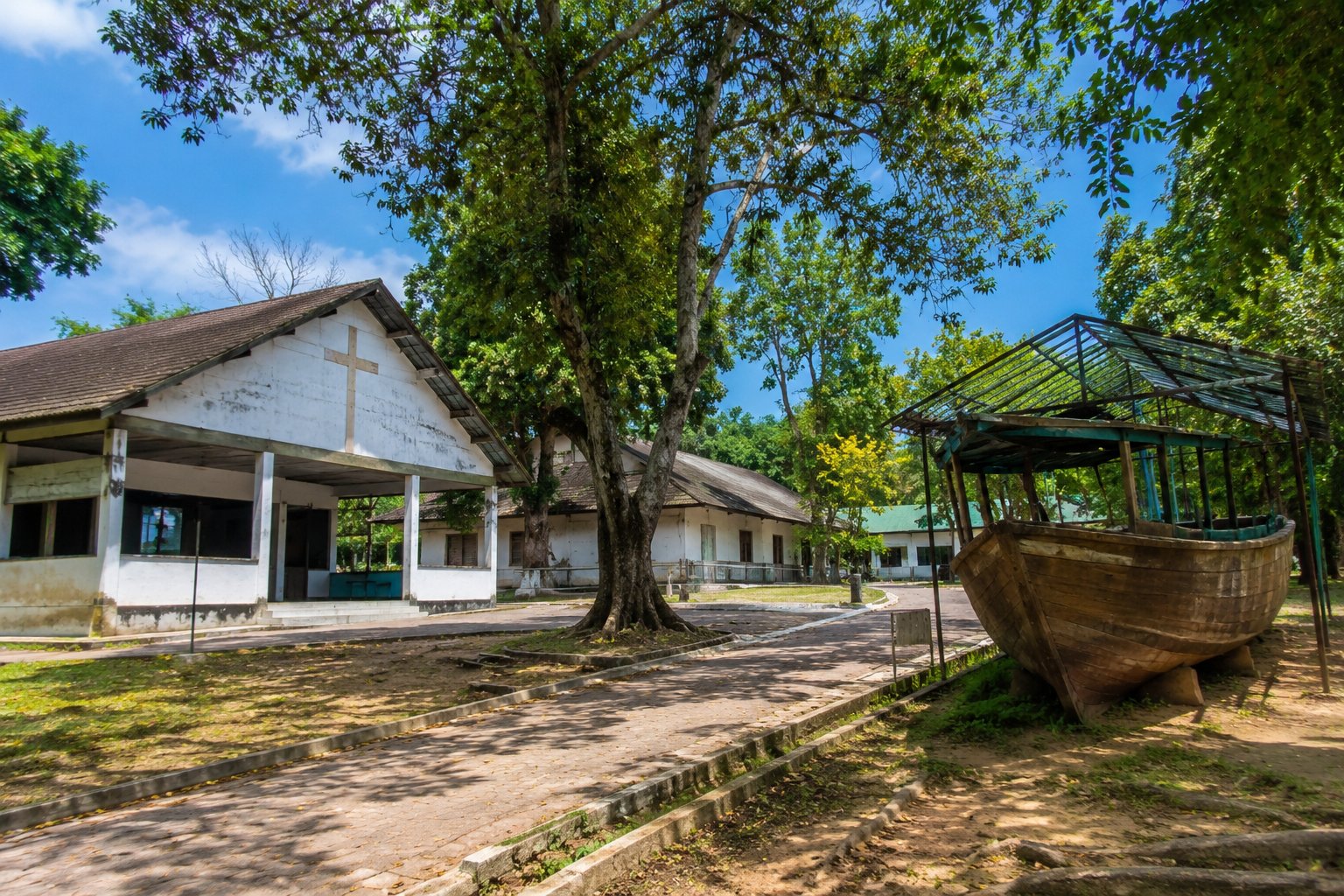
A Place That Felt Quietly Heavy
I visited Camp Vietnam in Pulau Galang without expecting much at first. I thought it would simply be another historical site in Batam. But the moment I entered the area, everything felt different.
The air was quiet. Not peaceful quiet, but the kind of silence that makes you slow down naturally.
Old buildings stood still among tall trees. Some were already worn by time, while others carried traces of lives that once passed through here. I kept imagining how thousands of Vietnamese refugees once arrived on this island after escaping war by sea, carrying fear, hope, and uncertainty all at once.
Walking there did not feel like visiting a tourist attraction.
It felt like stepping inside someone else’s memory.
The Church, The Boats, and The Empty Rooms
One of the places that stayed in my mind was the old church inside the camp area. The wooden benches, faded walls, and quiet atmosphere made everything feel deeply emotional.
Not far from there, I saw photographs, small museums, and preserved refugee boats. Looking at those boats made me realize how dangerous their journeys must have been.
Some rooms inside the camp were left almost empty. Yet somehow, those empty spaces felt full of stories.
I remember standing there for several minutes without speaking.
There are places that entertain you, and there are places that quietly change the way you think. Camp Vietnam felt like the second kind.
Why This Historical Site Feels Important
Camp Vietnam in Pulau Galang was once one of the largest refugee camps in Southeast Asia during the late 1970s until the 1990s. Thousands of Vietnamese refugees temporarily lived here while waiting for relocation to other countries.
Today, many parts of the area are preserved as historical tourism sites so visitors can learn about humanity, migration, survival, and hope.
What I appreciated most was how authentic everything felt. Nothing looked overly commercialized. The experience remained simple, respectful, and emotional.
Travel Tips for Visiting Camp Vietnam, Pulau Galang
Location
Camp Vietnam is located on Pulau Galang, around 1.5–2 hours from Batam Center by car or motorbike.
Entrance Fee
The entrance fee is usually around IDR 10,000–30,000 depending on the area and parking.
Best Time to Visit
Morning or late afternoon is the best time because the weather is cooler and more comfortable for walking around the historical complex.
Transportation Tips
👉🏻 Renting a motorbike gives more flexibility because the roads toward Galang are scenic and relatively quiet.
👉🏻 Online taxis are available from Batam city areas, but return transportation can sometimes be limited.
Local Culture & Etiquette
This is a historical and memorial area, so visitors are encouraged to keep noise low and respect the environment. Some visitors come not only for tourism, but also for remembrance.
What to Bring
👉🏻 Drinking water
👉🏻 Comfortable walking shoes
👉🏻 Umbrella or sunscreen
👉🏻 Camera for documentary-style photography
A Question for Fellow Travelers
Have you ever visited a historical place that unexpectedly felt emotional instead of educational?
I came to Camp Vietnam thinking I would simply learn history, but I left thinking deeply about people, survival, and how fragile life can feel during uncertain times.
If you have visited Pulau Galang before, which part affected you the most?
Discussion (0)
No replies yet
Be the first to share your thoughts in this discussion! ✨
Verified Real-World discussion Case Study
This forum thread serves as a community case study for interactive travel planning and local guide alignment. Real travelers share actual itineraries, current transport options, and resident recommendations to support collaborative and secure tourism coordination.
Verified Sources & Geolocation References▼
This discussion guide incorporates details verified against official geolocation databases and international guidelines: