Acropolis Museum, Athens, Greece: Where Glass Floors Let Me Walk Above Ancient Time

About This Discussion
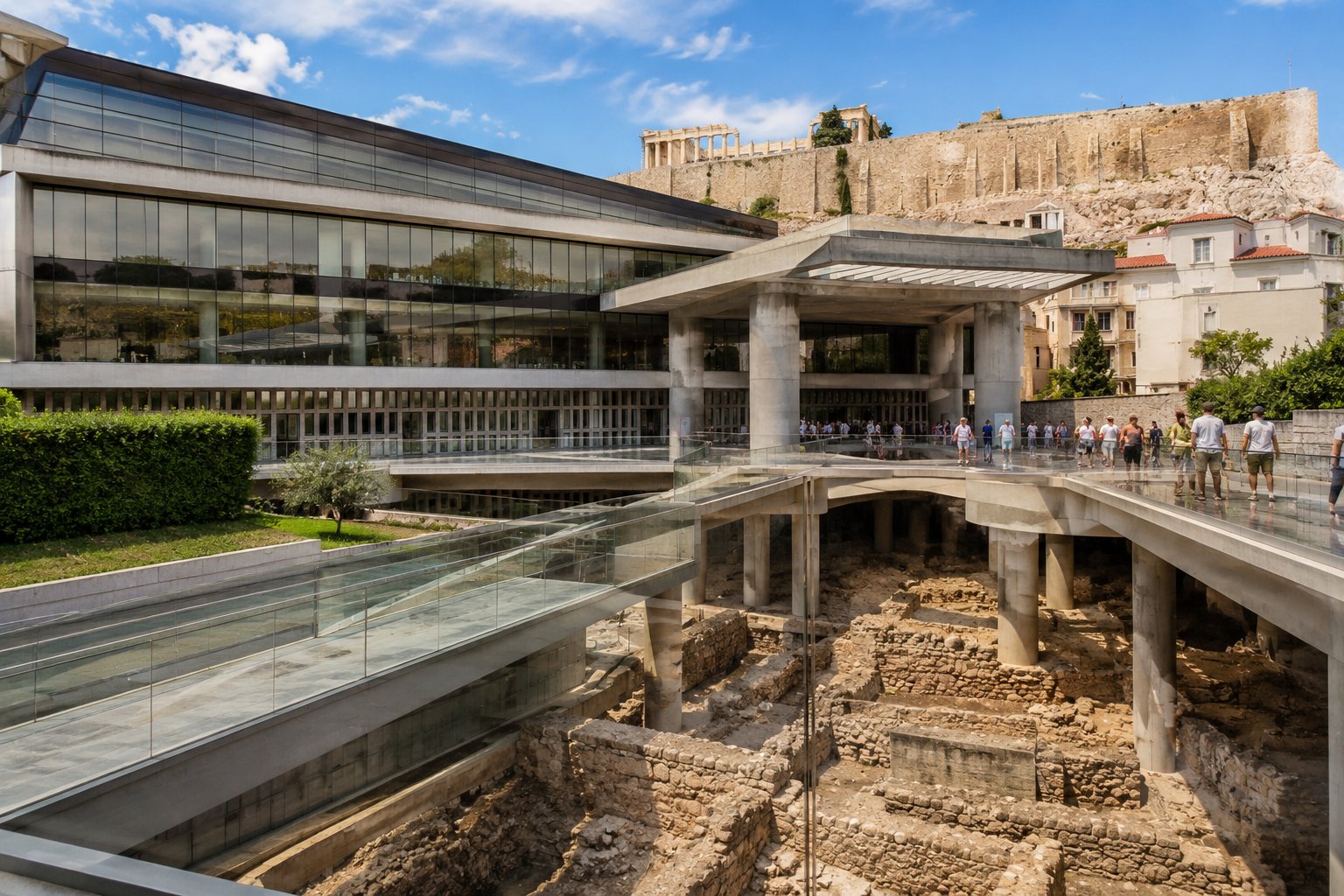
A Museum That Doesn’t Feel Like a Museum
I didn’t expect the Acropolis Museum to feel alive.
From the outside, it looks modern clean lines, glass, steel, and sunlight reflecting off its sharp edges. But once I stepped inside, it felt less like entering a building and more like stepping into a conversation with time.
The most unforgettable moment for me was walking on the glass floors.
Below my feet were ruins ancient stones, foundations, fragments of a city that once shaped philosophy, democracy, and civilization itself. I remember slowing down without realizing it, almost afraid that my steps might disturb something sacred underneath.
It was quiet, but not empty. The silence felt intentional.
The Emotional Weight of the Exhibits
The museum doesn’t just display artifacts it presents them like memories that refused to disappear.
Statues without faces, broken columns, marble carvings softened by centuries. And yet, nothing felt dead.
I stood for a long time in front of the Parthenon Gallery, where natural light pours in and wraps around the sculptures. The Acropolis itself is visible through the glass, as if the past and present are still watching each other.
There was a strange emotion I couldn’t name properly. Not sadness. Not awe alone. Something in between like meeting a version of humanity that still echoes today.
Acropolis Museum Travel Tips & Guide
How to Get There
👉🏻 Located at the foot of the Acropolis Hill, Athens city center
👉🏻 Easily accessible by metro: Acropoli Station (Red Line), just a 2–3 minute walk
👉🏻 Walking from Plaka district takes around 10–15 minutes
Best Time to Visit
👉🏻 Early morning (before 10 AM) for a quieter experience
👉🏻 Late afternoon for softer light through the glass gallery
👉🏻 Avoid peak midday in summer due to crowds
Ticket Price
👉🏻 Standard entry: approximately €10–€15 per person
👉🏻 Reduced tickets available for students and EU youth
👉🏻 Free entry days may be available on selected cultural dates
Local Culture & Visitor Etiquette
👉🏻 Speak softly inside the museum; it’s a calm, reflective space
👉🏻 Photography is allowed in most areas, but avoid flash
👉🏻 Dress comfortably Athens can be warm, and you’ll likely walk a lot before or after
👉🏻 Greeks are welcoming; a simple “Efharisto” (thank you) is always appreciated
Forum Discussion - Let’s Talk Travel Experiences
I’m curious how others felt here.
When you visited the Acropolis Museum, did you also feel that strange mix of modern design and ancient presence?
Or was it more of a straightforward museum visit for you?
Also:
👉🏻 Did you visit the Acropolis before or after the museum?
👉🏻 Do you think the glass floor adds to the experience or distracts from it?
👉🏻 Which exhibit stayed in your memory the longest?
I feel like this is one of those places where every traveler walks out with a slightly different version of the same story.
Discussion (0)
No replies yet
Be the first to share your thoughts in this discussion! ✨
Verified Real-World discussion Case Study
This forum thread serves as a community case study for interactive travel planning and local guide alignment. Real travelers share actual itineraries, current transport options, and resident recommendations to support collaborative and secure tourism coordination.
Verified Sources & Geolocation References▼
This discussion guide incorporates details verified against official geolocation databases and international guidelines: