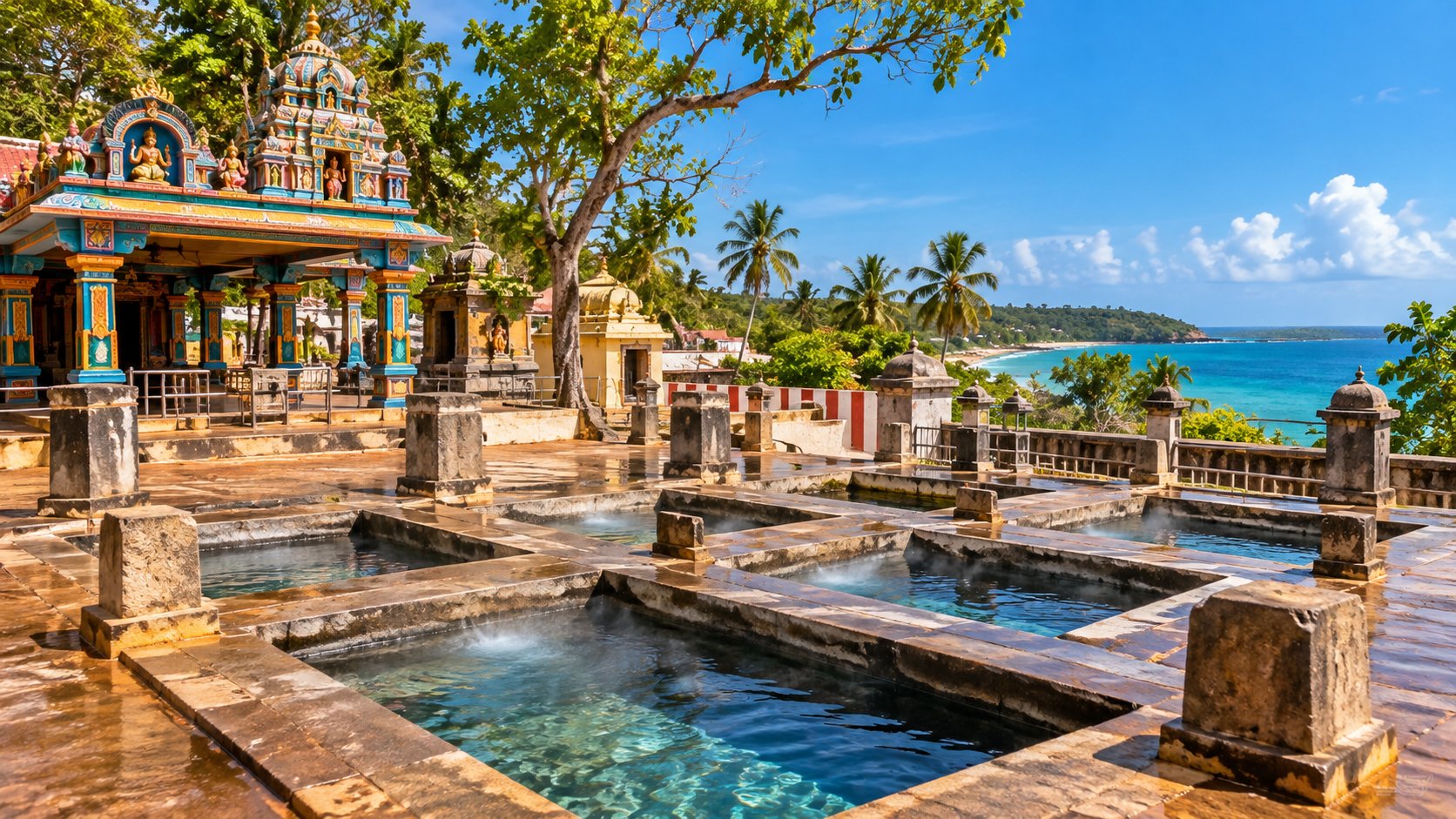
Kanniya Hot Water Wells, Trincomalee/Sri Lanka: Where Warm Springs Meet Ancient Stories and the Sea

2h ago(The Sightseer)
There was something wonderfully unexpected about my time in Trincomalee, Sri Lanka. I came expecting turquoise water, beautiful beaches, and perhaps a little history. What I found was a place where the sea, temples, legends, and everyday local life seemed to exist side by side.
One of the stops that stayed with me was Kanniya Hot Water Wells, a small complex of seven natural hot-water wells. Each well has a slightly different temperature, and the shallow square pools are arranged closely together. The experience is simple: water is drawn from the wells using buckets and poured over the body rather than swimming in them.
It sounds ordinary when described that way, but standing there felt different. The warm water, the sounds of people around me, and the stories connected to the place created a sense of being somewhere much older than the modern tourist map suggested.
A Morning Between History, Temples and the Coast
I started my Trincomalee day around Fort Frederick, a historic fort overlooking the harbour. Walking through its old walls felt like opening a different chapter of the city. The fort has Portuguese and Dutch-era history, while the sacred Koneswaram Temple sits dramatically within the area around Swami Rock.
From there, I continued exploring Trincomalee's coastal temples. The atmosphere changed with every few streets colourful Hindu shrines, incense in the air, devotional sounds, and locals going about their daily routines.
For me, this was one of the most beautiful parts of travelling in Trincomalee. The temples didn't feel like isolated tourist attractions. They were part of the living culture of the city.
Then came Kanniya.
The wells are connected with local Hindu traditions and the famous Ravana legend, which tells of the springs emerging after Ravana struck the earth with his sword. Whether you experience the story as mythology, cultural heritage, or simply an interesting local legend, it adds another layer to the visit.
Seven Wells, Seven Temperatures, One Quiet Experience
What I loved most about Kanniya was its simplicity.
There were no elaborate attractions or complicated activities. Just seven wells, warm water, people sharing the same space, and a story that has been passed down through generations.
The wells are relatively shallow, and visitors traditionally use buckets to scoop up the water. Some travellers visit because of the belief that the springs have healing or cleansing qualities, while others simply come to experience this unusual part of Trincomalee's cultural landscape.
I think that's what made the experience memorable for me. Sometimes travelling isn't about finding the most spectacular view. Sometimes it's about slowing down enough to understand why a seemingly simple place matters to the people who live around it.
From Warm Springs to Saltwater
After spending time around Kanniya, I wanted something completely different the ocean.
Trincomalee's coastline is perfect for changing the rhythm of the day. After the warmth of the springs, heading toward the beach and eventually joining a snorkelling trip around Pigeon Island felt refreshing.
The contrast was almost poetic: warm spring water in the morning, then cool Indian Ocean water later in the day.
The dry season from roughly May to September is generally considered a good period for visiting Trincomalee, especially for coastal activities because sea conditions and underwater visibility can be more favourable.
Under the water, the experience becomes quieter again. Instead of temples and old fort walls, there are coral, fish, sunlight filtering through the sea, and the feeling of floating somewhere far away from everyday routines.
And after snorkelling, I couldn't resist trying some local food. Around Trincomalee, seafood is an obvious choice fresh fish, prawns, and simple Sri Lankan preparations filled with spices. A plate of local food after a day by the ocean somehow tastes better.
Getting to Kanniya Hot Water Wells
Kanniya is located around 5–8 km from central Trincomalee, depending on the starting point.
The easiest options are:
• Tuk-tuk: The most convenient choice for short distances and a very local way to travel.
• Private car/taxi: More comfortable if visiting Kanniya together with Fort Frederick, temples, and the beaches in one day.
• Scooter/motorbike: A flexible option for experienced riders who want to explore Trincomalee independently.
From Trincomalee town, the journey generally takes around 20–30 minutes, depending on traffic and your exact starting point.
Practical Information Before You Go
Opening hours: Current listings generally show approximately 7:00 AM–7:00 PM, although some sources list slightly different hours.
Entrance fee: Fees have changed over time and vary between sources. Recent travel information lists approximately LKR 300 for adults, while older references report lower foreign-visitor fees. It's best to confirm the current price at the entrance before visiting.
Best time to visit: Go in the morning, especially if you want a quieter experience and to avoid the stronger midday heat. Weekends can become noticeably busier.
Main spots and experiences:
• Seven natural hot-water wells
• Traditional bucket bathing
• Local Hindu cultural traditions
• Nearby temple and historical sites
• Fort Frederick
• Koneswaram Temple
• Trincomalee coastline
• Pigeon Island snorkelling
A Small Cultural Reminder
Kanniya is more than a tourist attraction. It has cultural and religious significance for local communities.
If you decide to bathe, dress modestly and follow the local customs. Some travel guidance specifically advises against wearing only a swimsuit. Bring a towel, spare clothes, and sandals, and be mindful of people who may be visiting for religious or traditional reasons.
Most importantly, don't treat the wells simply as a photo opportunity. Watch how locals use the space, ask permission before photographing people, and leave the area as clean as you found it.
What I Took Home From Kanniya
Looking back, Kanniya Hot Water Wells wasn't the biggest attraction of my Trincomalee journey.
But perhaps that's exactly why I remember it.
I remember the warmth of the water against my skin. I remember the stories of Ravana. I remember temple bells and colourful shrines. I remember walking through Fort Frederick and looking toward the endless blue beyond the old walls.
And then I remember the sea.
Trincomalee somehow brought all of these things together history, spirituality, food, local life, and the freedom of being in the water.
Maybe that's what authentic travel feels like.
Not simply seeing a beautiful place, but allowing a place to tell you a little about itself.
And Kanniya, with its seven warm wells, seemed to whisper its story rather than shout it.
Practical Travel Tips
- How to get thereMost locations are accessible via central public transport or local taxi apps. Plan your route in advance.
- Best time to visitEarly morning or late afternoon to avoid peak crowds and capture the best lighting.
Local Culture
- Always ask for permission before taking photos of local residents.
- Carry small cash for traditional markets or street food vendors.
- Dress respectfully when visiting historical or religious sanctuaries.
Related Stories
No related stories found.
Top Experiences
No experiences found.
Forums Community
Join the forum community.
Upcoming Meetups
No meetups scheduled.
Inspired by this story?
Discover amazing local experiences and read more authentic travel journals from around the world.
Verified Real-World Travel Report
This travel story serves as a real-world case study for neighborhood exploration. The contributor has personally visited the site, verified transportation costs, and documented safety protocols to ensure accurate, resident-verified guidance for future community travelers.
Verified Sources & Geolocation References▼
This travel guide incorporates details verified against official geolocation databases and international guidelines: