
Tulum, Mexico: Listening to the Sea at Zona Arqueológica de Tulum
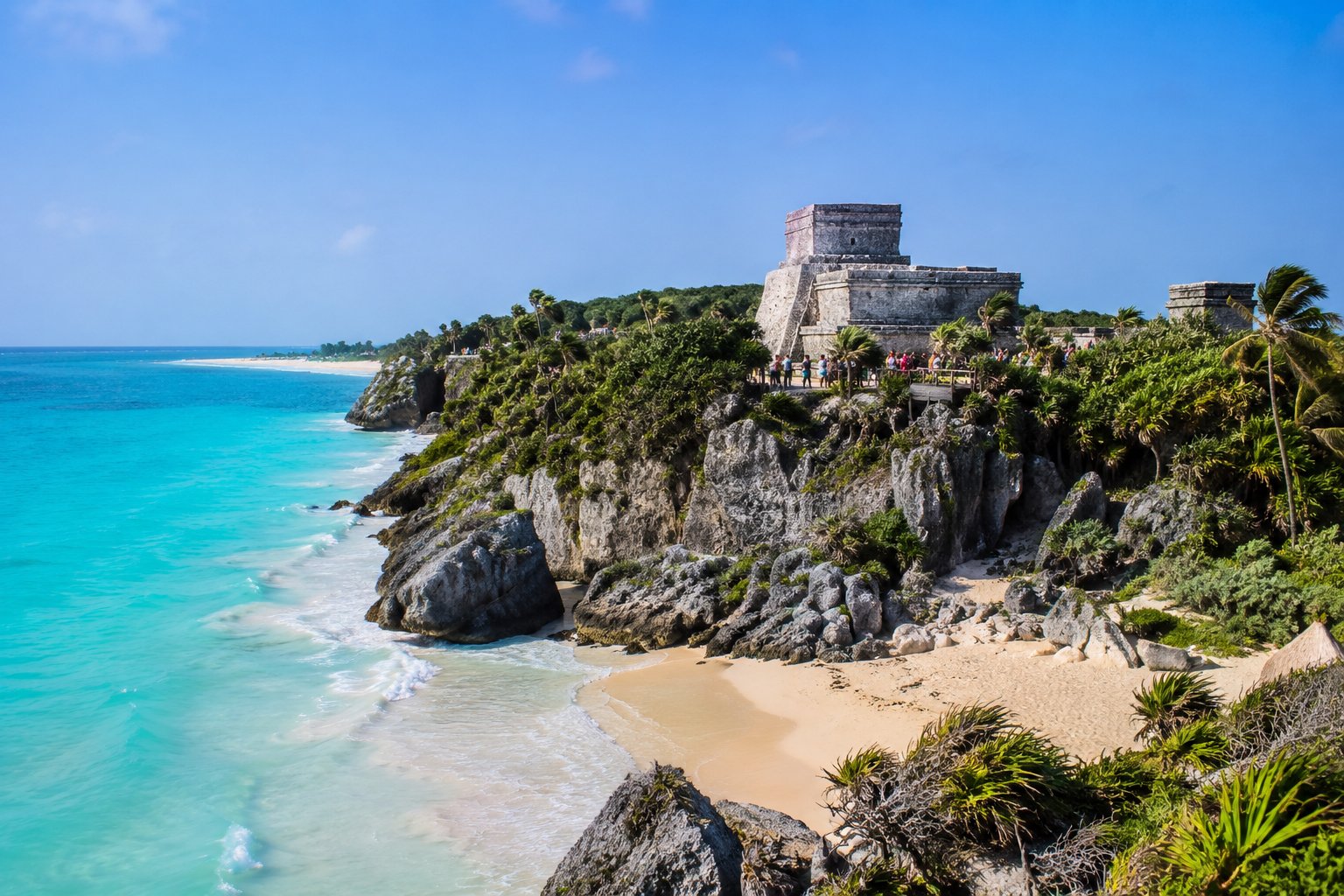
"Standing on the limestone cliffs of Tulum, I watched the turquoise waters of the Caribbean stretch endlessly toward the horizon while ancient Maya ruins stood quietly behind me. It felt like a place where history and nature shared the same breath, creating one of the most unforgettable moments of my journey through Mexico."

~5 - 7 Hours
Morning (08:00 - 10:30)
Central Cancun / Main Transit Hub
A Morning Above the Caribbean
I arrived in Tulum shortly after sunrise, hoping to avoid both the heat and the crowds.
The road leading to the archaeological zone was already alive with cyclists, local vendors, and travelers carrying cameras. Yet as I walked toward the entrance, there was a sense of calm that surprised me. The Caribbean breeze carried the scent of saltwater through the trees, and for a moment, it felt like the modern world was fading behind me.
Tulum is different from many ancient archaeological sites.
Most Maya cities were built deep inland, surrounded by dense forests. Tulum, however, stands dramatically on limestone cliffs overlooking the Caribbean Sea. The combination of ancient stone structures and brilliant turquoise water creates a landscape that feels almost unreal.
As I entered the site, I immediately understood why it remains one of the most visited historical attractions in Mexico.
The Ancient City Facing the Sea
Walking Through Maya History
The first thing that caught my attention was how open everything felt.
Wide pathways connected temples, ceremonial platforms, and defensive walls that once protected the city. Unlike some archaeological sites where ruins blend into the surrounding environment, Tulum feels intentionally connected to the sea.
Every few steps revealed another view of the Caribbean.
The city was once an important trading port between the 13th and 15th centuries. Merchants arrived by sea, bringing goods from across the Maya world. Standing there, I tried to imagine canoes approaching the coastline centuries ago while traders prepared to enter the city gates.
The ruins may no longer be complete, but their presence remains powerful.
Standing Before El Castillo
The Most Iconic View in Tulum
Eventually, I reached El Castillo, the most famous structure within the archaeological zone.
Positioned directly above the cliffs, the temple overlooks the sea like a silent guardian.
The sunlight reflected off the water below, creating shades of blue that seemed to change every few minutes. I found myself standing there much longer than expected, not because there was more to see, but because there was something deeply calming about the view.
The wind moved continuously across the cliff edge.
The ocean below crashed gently against the rocks.
Behind me stood centuries of history.
In front of me stretched the endless Caribbean.
It was one of those rare travel moments where words felt unnecessary.
The Sound of Waves Between Ancient Stones
A Place That Feels Alive
Many historical sites impress through size.
Tulum impressed me through atmosphere.
Even among other visitors, I could hear birds calling from the trees and waves rolling below the cliffs. The combination of nature and history gave the site a living energy.
I sat quietly beneath the shade for a while, simply observing.
Families walked slowly along the pathways. Local guides shared stories about Maya astronomy and trade. Iguanas rested comfortably on warm stones, completely unbothered by the visitors around them.
The ruins felt less like a monument and more like part of the landscape itself.
What Makes Tulum Unique
More Than Just Ancient Ruins
What stayed with me most was not a specific building.
It was the relationship between the city and its surroundings.
The Maya chose a location that combined strategic importance with extraordinary beauty. Even centuries later, that decision continues to define the experience of visiting Tulum.
Few archaeological sites in the world offer such a dramatic coastal setting.
The cliffs, the sea, and the ruins all seem connected, creating a place that feels timeless.
Long after leaving the site, I could still picture the waves below El Castillo and the ancient walls standing quietly above them.
Travel Tips for Visiting Zona Arqueológica de Tulum
How to Get There
From Tulum Town
👉🏻 Taxi: Approximately 10–15 minutes.
👉🏻 Bicycle: Around 15–25 minutes depending on your starting point.
👉🏻 Shuttle services are available from designated parking and visitor areas.
From Cancún
👉🏻 Driving time: Approximately 2 to 2.5 hours.
👉🏻 ADO buses operate regularly between Cancún and Tulum.
From Playa del Carmen
👉🏻 Driving time: Around 1 hour.
👉🏻 Frequent bus connections are available daily.
Best Time to Visit
Best Time of Day
👉🏻 Arrive between 8:00 AM and 10:00 AM for cooler temperatures and fewer visitors.
👉🏻 Late afternoon can also be pleasant, though mornings generally offer better conditions.
Best Season
👉🏻 November to April offers drier weather and comfortable temperatures.
👉🏻 May to October is warmer and more humid, with occasional tropical rain.
Entrance Fee
Prices may change over time, but visitors should generally expect:
👉🏻 Entrance fee: Approximately MXN 100–150 per person.
👉🏻 Additional conservation or regional fees may apply.
Always check official government tourism sources before visiting for the latest pricing.
Local Culture & Etiquette
Respect the Archaeological Site
👉🏻 Do not climb on restricted structures.
👉🏻 Stay on designated pathways.
👉🏻 Follow instructions from park staff and guides.
Support Local Businesses
👉🏻 Consider purchasing souvenirs from local artisans.
👉🏻 Use local guides if you want deeper historical insight into Maya culture.
Environmental Awareness
👉🏻 Carry reusable water bottles.
👉🏻 Avoid leaving litter.
👉🏻 Respect local wildlife, especially the iguanas frequently seen throughout the site.
Final Thoughts
There are places that impress you with grand architecture, and there are places that stay with you because of how they make you feel.
Zona Arqueológica de Tulum was the second kind for me.
Standing on those cliffs between ancient Maya history and the endless Caribbean Sea, I felt connected to something much older than myself. The ruins were beautiful, but it was the sound of the ocean, the wind across the stone walls, and the feeling of timelessness that made the experience unforgettable.
This story is curated and verified in accordance with PT Locallytrip Teknologi Indonesia Community & Editorial Guidelines.
Inspire your travel community! 🌍
Share this story to your favourite social platforms in one click.