Denpasar, Indonesia: Getting Lost in the Pulse of Local Flavors at Pasar Badung
About This Discussion
I didn’t come to Pasar Badung as a tourist looking for highlights.
I came as someone who just wanted to see how Denpasar breathes before the city fully wakes up.
The air was still slightly cool when I arrived. Vendors were already setting up, metal shutters rolling up, plastic chairs scraping against the ground. There’s a rhythm here that doesn’t need attention it simply exists.
And somehow, I found myself inside it.
The First Step Into the Market
Pasar Badung doesn’t introduce itself gently.
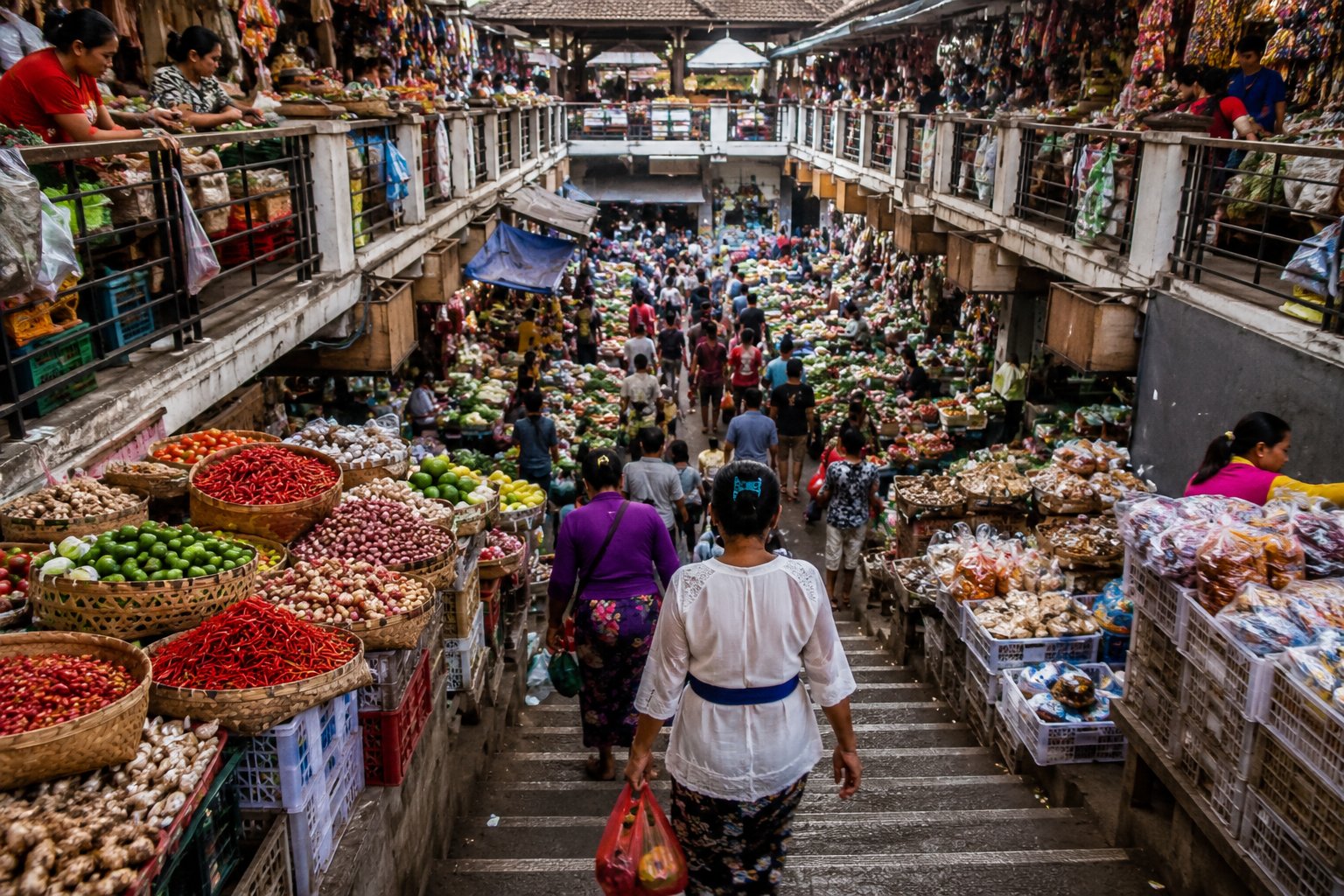
It hits you with sound, smell, and movement all at once fresh spices, fried snacks, fish, fruit, and the constant calling of sellers inviting you closer.
I walked slowly, not because I was lost, but because everything felt worth noticing.
A woman handed me a small sample of traditional Balinese cake without saying much. Just a nod. That moment stayed with me more than I expected. No performance. No tourism language. Just everyday kindness.
Street Food That Feels Like Memory
I tried a few simple things nothing fancy, nothing staged for visitors.
Warm rice wrapped in banana leaves. Fried snacks still hot from the pan. Sweet coffee served in a small plastic cup that somehow tasted stronger than it should.
Every bite felt connected to something older than me family kitchens, early mornings, routines that repeat every day without needing recognition.
Pasar Badung is not about “trying food.”
It’s about witnessing how food actually lives here.
Travel Tips for Visiting Pasar Badung
Best Time to Visit
Go early morning between 5:30 AM – 9:00 AM.
This is when the market feels most alive, and food is freshly prepared.
How to Get There
👉🏻 Located in central Denpasar, easy access by Grab, Gojek, or scooter
👉🏻 Parking is available but limited during peak hours
👉🏻 Walking around the area is the best way to explore inside the market
Entrance Fee
👉🏻 No entrance fee
👉🏻 Just bring small cash for food and shopping
Local Culture & Etiquette
👉🏻 Greet vendors politely, a small smile goes a long way
👉🏻 Don’t rush bargaining; it’s part of the social rhythm
👉🏻 Be respectful when taking photos ask first
👉🏻 Keep space clear for locals doing daily shopping (this is not a staged market)
Why Pasar Badung Stays in My Mind
Some places impress you.
Others quietly stay with you.
Pasar Badung is the second kind.
It doesn’t try to be beautiful for visitors. It simply is what it has always been a working market, a meeting point, a morning routine for thousands of people.
And in that honesty, I found something rare: a version of Bali that doesn’t perform itself.
Let’s Talk
Have you ever experienced a local market that felt more like life than tourism?
I’m curious how others experienced Pasar Badung or similar markets in different cities.
Drop your thoughts, tips, or hidden food finds.
Discussion (4)
What makes Pasar Badung different from other local markets you’ve visited?
@Yina meiling For me, it was the authenticity. Pasar Badung never felt like it was trying to impress visitors it simply carried on with daily life. That made every interaction, from the food to the people, feel natural and genuine rather than curated for tourists. 😊🛍️✨

Yes. The best markets are the ones that feel unchanged by tourism. You’re not just visiting a place you’re witnessing everyday life as it happens. 😊🛍️✨
@Daniel Cooper Exactly. Those are often the most memorable travel experiences because they let you see a place as it truly is, not as it's presented to visitors. Pasar Badung felt very much like that for me. 😊✨🛍️
Verified Real-World discussion Case Study
This forum thread serves as a community case study for interactive travel planning and local guide alignment. Real travelers share actual itineraries, current transport options, and resident recommendations to support collaborative and secure tourism coordination.
Verified Sources & Geolocation References▼
This discussion guide incorporates details verified against official geolocation databases and international guidelines: