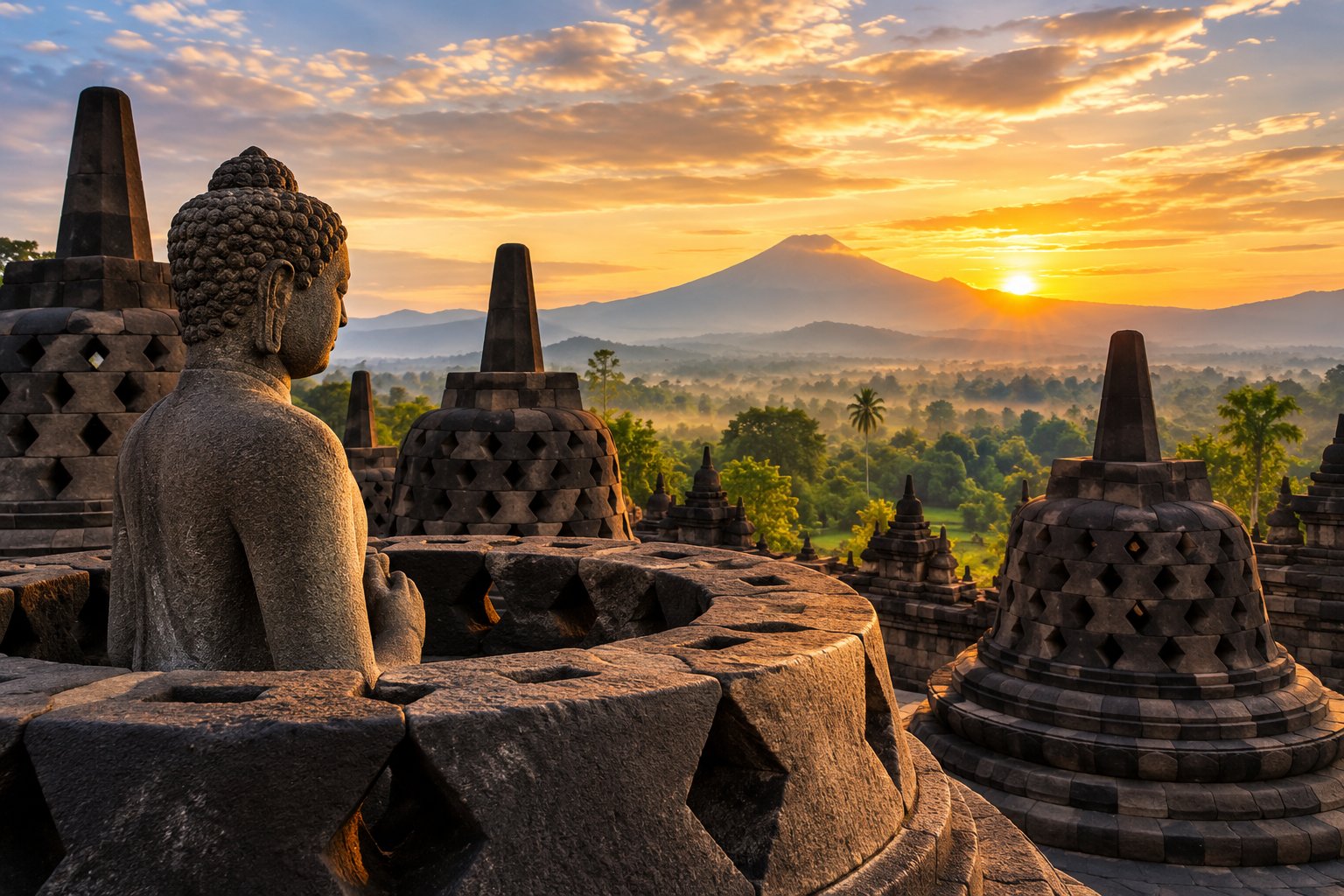
Yogyakarta Local Culture, Yogyakarta, Indonesia: Finding the Soul of Java in Everyday Moments

August 31, 2026(The Sightseer)
A Journey Beyond the Tourist Spots
When I first arrived in Yogyakarta, I thought I already knew what to expect. I imagined ancient temples, traditional markets, batik shops, and plates of warm gudeg. But after spending time walking through the city and its surrounding neighborhoods, I realized that Yogyakarta's culture is not something you simply visit. It is something you slowly experience.
I started my morning by exploring the quieter streets around the city. Motorbikes passed by, small food stalls were beginning to open, and the smell of freshly brewed coffee mixed with the scent of traditional food. There was no rush. People seemed to have their own rhythm, and I found myself naturally slowing down too.
One of the things I enjoyed most was seeing how traditional Javanese culture continues to exist alongside modern life. You can find young people working from cafés while, only a few streets away, traditional ceremonies and arts are still practiced.
Experiencing Everyday Javanese Culture
Batik, Gamelan, and Local Craftsmanship
Batik became one of my favorite parts of the experience. Instead of simply buying a finished piece as a souvenir, I wanted to understand the process behind it. Watching artisans carefully create patterns by hand made me appreciate how much patience and meaning can be found in a single piece of fabric.
I also had the chance to experience traditional Javanese music. The sound of gamelan felt completely different from the music I usually hear while traveling. It was calm, rhythmic, and almost meditative.
Food That Feels Like Home
Food was another way I connected with the local culture. I tried gudeg, a famous Yogyakarta dish made from young jackfruit and traditionally served with rice, chicken, tofu, and other accompaniments.
Eating at a small local warung felt more memorable than having a meal in a fancy restaurant. I sat among locals, watched the daily activity around me, and simply enjoyed the moment.
Getting Around Yogyakarta
Getting around Yogyakarta is relatively easy. From Yogyakarta International Airport, travelers can use the airport train, taxi, or other private transportation to reach the city.
Inside the city, I found motorbike taxis and ride-hailing services convenient for short distances. Renting a scooter can also be practical if you are comfortable riding in Indonesian traffic. For a slower experience, walking around local neighborhoods is definitely worth trying.
Best Time to Experience Yogyakarta
The dry season, generally from around May to October, can be a comfortable period for exploring Yogyakarta, especially if you plan to spend a lot of time outdoors.
I personally recommend starting activities early in the morning. The weather tends to be more comfortable, and the streets feel less crowded. Early mornings also gave me some of my favorite moments because I could observe the city waking up naturally.
Costs and Practical Information
Yogyakarta can be explored on a relatively flexible budget. Local meals at warungs can often cost around IDR 15,000–40,000, while transportation by ride-hailing service varies depending on distance.
Entrance fees for cultural attractions vary, generally ranging from around IDR 10,000 to IDR 100,000 or more depending on the destination and activity. Some cultural experiences, workshops, or performances may have separate fees.
Because prices and entrance fees can change, I recommend checking the latest information directly with the attraction or local organizer before visiting.
Respecting Local Culture
Small Things Matter
The biggest lesson I took from Yogyakarta was that cultural respect does not have to be complicated.
Dress modestly when visiting religious or traditional places. Ask permission before photographing people, especially during ceremonies. Speak politely, avoid touching sacred objects, and follow local instructions when entering traditional spaces.
Learning a few simple Indonesian or Javanese greetings can also make conversations warmer. Even a simple “terima kasih” can go a long way.
The Part of Yogyakarta I Took Home
What I remember most about Yogyakarta is not one particular landmark. It is the atmosphere.
It was the sound of gamelan in the distance, a quiet conversation with a local seller, the taste of gudeg on a simple plate, and the sight of traditional life continuing naturally in the middle of a modern city.
Yogyakarta reminded me that authentic travel does not always require searching for something hidden. Sometimes, the most meaningful experiences are right in front of us if we are willing to slow down, observe, and become part of the moment.
For me, that is what makes experiencing local culture in Yogyakarta so special. I arrived as a traveler looking for places to see, but I left remembering the people, traditions, and small everyday moments that gave the city its soul.
Practical Travel Tips
- How to get thereMost locations are accessible via central public transport or local taxi apps. Plan your route in advance.
- Best time to visitEarly morning or late afternoon to avoid peak crowds and capture the best lighting.
Local Culture
- Always ask for permission before taking photos of local residents.
- Carry small cash for traditional markets or street food vendors.
- Dress respectfully when visiting historical or religious sanctuaries.
Related Stories
No related stories found.
Top Experiences
No experiences found.
Forums Community
Join the forum community.
Upcoming Meetups
No meetups scheduled.
Inspired by this story?
Discover amazing local experiences and read more authentic travel journals from around the world.
Verified Real-World Travel Report
This travel story serves as a real-world case study for neighborhood exploration. The contributor has personally visited the site, verified transportation costs, and documented safety protocols to ensure accurate, resident-verified guidance for future community travelers.
Verified Sources & Geolocation References▼
This travel guide incorporates details verified against official geolocation databases and international guidelines: