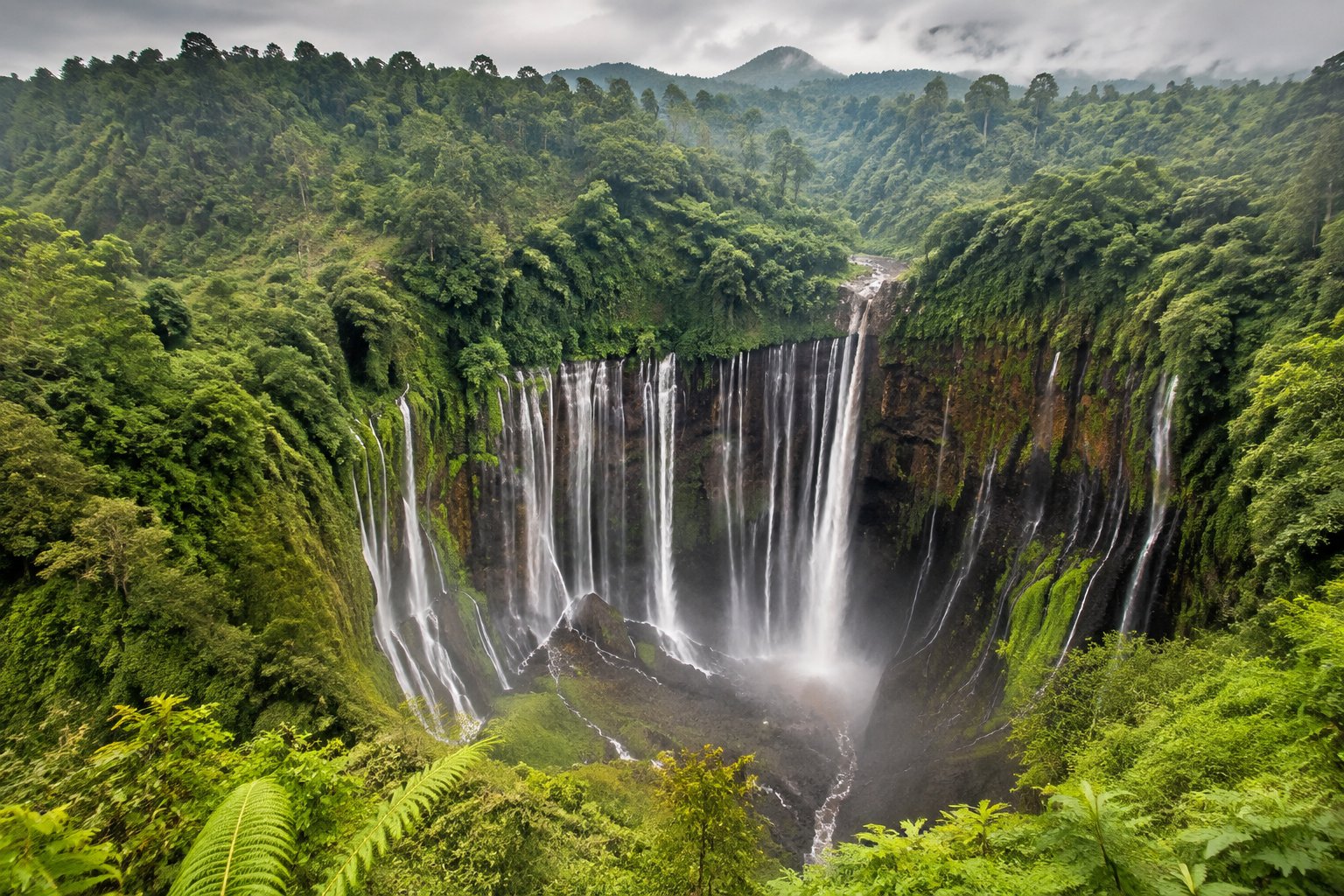
Tumpak Sewu, Indonesia: Standing Before the Tears of the Earth

August 16, 2026(The Sightseer)
Tumpak Sewu, Indonesia: Standing Before the Tears of the Earth
I still remember the first moment I saw Tumpak Sewu. After a long journey through the quiet villages of East Java, I finally stood before a waterfall that looked almost unreal. Thousands of streams of water flowed down the massive green cliffs, creating a natural curtain surrounded by mist and the peaceful sound of rushing water. At that moment, I felt small in the most beautiful way, as if nature was reminding me how incredible the world truly is.
Located on the border of Lumajang and Malang, East Java, Tumpak Sewu is often described as one of Indonesia’s most breathtaking waterfalls. The name “Tumpak Sewu” comes from the Javanese words meaning “a thousand waterfalls,” representing the many streams that fall side by side from the cliffs.
A Journey Through East Java’s Hidden Landscape
My journey began by traveling to Lumajang, passing through beautiful countryside views, local farms, and small villages where people welcomed visitors with warm smiles. The road toward Tumpak Sewu offered a glimpse of authentic East Javanese life, far away from crowded tourist areas.
To reach the viewpoint, I walked along a short trail surrounded by tropical greenery. The famous Panorama Viewpoint provides an incredible view from above, but the adventure becomes even more memorable when descending closer to the waterfall. The path to the bottom requires careful walking through rocky areas, bamboo stairs, and sometimes slippery routes.
Standing at the base of Tumpak Sewu, surrounded by towering cliffs and refreshing mist, was the most unforgettable part of the experience. It felt like entering a hidden world created by nature.
Authentic Local Experience Around Tumpak Sewu
Beyond the waterfall itself, the surrounding villages offer meaningful cultural experiences. Travelers can interact with local residents, enjoy traditional East Javanese food, and learn about the daily lives of communities living near this natural wonder.
Trying local dishes such as nasi pecel, rawon, or traditional snacks from nearby villages added another layer to my journey. The simple flavors and friendly conversations with locals made the trip feel more personal and authentic.
Supporting local guides is also a great way to experience Tumpak Sewu responsibly. Many local guides understand the safest routes and can share stories about the area’s history, nature, and culture.
Transportation to Tumpak Sewu
The nearest major cities are Malang and Surabaya.
• From Malang: Travelers can drive approximately 2.5–3 hours by car or motorcycle to Tumpak Sewu.
• From Surabaya: The journey takes around 4–5 hours by private vehicle.
• Public transportation options are available, but they require multiple transfers, so renting a vehicle or hiring a local driver is usually more convenient.
For a more authentic experience, many travelers choose to stay overnight in nearby villages before exploring the waterfall early in the morning.
Best Time to Visit Tumpak Sewu
The best time to visit Tumpak Sewu is during the dry season, usually from May to October. During this period, the hiking paths are safer, and visitors have better chances of enjoying clear views.
Early morning is the ideal time to arrive because the atmosphere is calmer, the light is softer for photography, and the area is less crowded.
During the rainy season, the waterfall becomes more powerful, but the trails can become dangerous due to slippery conditions and stronger water flow.
Ticket Price and Travel Costs
The entrance fee for Tumpak Sewu is approximately:
• Local visitors: around IDR 10,000–20,000 per person
• International visitors: around IDR 20,000–50,000 per person
Additional costs may include parking fees, local guide services, transportation, and food.
Prices may change, so travelers are encouraged to check the latest information before visiting.
Local Tips for Respectful Travel
When visiting Tumpak Sewu, respecting the local environment and culture is important.
• Wear comfortable hiking shoes because some trails are steep and slippery.
• Bring enough drinking water, especially if hiking down to the waterfall.
• Avoid leaving any trash and help protect the natural surroundings.
• Dress appropriately and respect local communities around the waterfall.
• Consider hiring a local guide for safety and to support the village economy.
• Always follow safety instructions, especially near strong water currents.
A Memory That Stays Forever
My visit to Tumpak Sewu was more than just seeing a beautiful waterfall. It was about feeling connected with nature, discovering the kindness of local people, and experiencing the peaceful rhythm of East Java.
As I left the valley, the sound of falling water slowly disappeared behind me, but the feeling remained. Tumpak Sewu is a reminder that some journeys are not only about the places we visit, but also about the emotions and memories we bring home.
Practical Travel Tips
- How to get thereMost locations are accessible via central public transport or local taxi apps. Plan your route in advance.
- Best time to visitEarly morning or late afternoon to avoid peak crowds and capture the best lighting.
Local Culture
- Always ask for permission before taking photos of local residents.
- Carry small cash for traditional markets or street food vendors.
- Dress respectfully when visiting historical or religious sanctuaries.
Related Stories
No related stories found.
Top Experiences
No experiences found.
Forums Community
Join the forum community.
Upcoming Meetups
No meetups scheduled.
Inspired by this story?
Discover amazing local experiences and read more authentic travel journals from around the world.
Verified Real-World Travel Report
This travel story serves as a real-world case study for neighborhood exploration. The contributor has personally visited the site, verified transportation costs, and documented safety protocols to ensure accurate, resident-verified guidance for future community travelers.
Verified Sources & Geolocation References▼
This travel guide incorporates details verified against official geolocation databases and international guidelines: