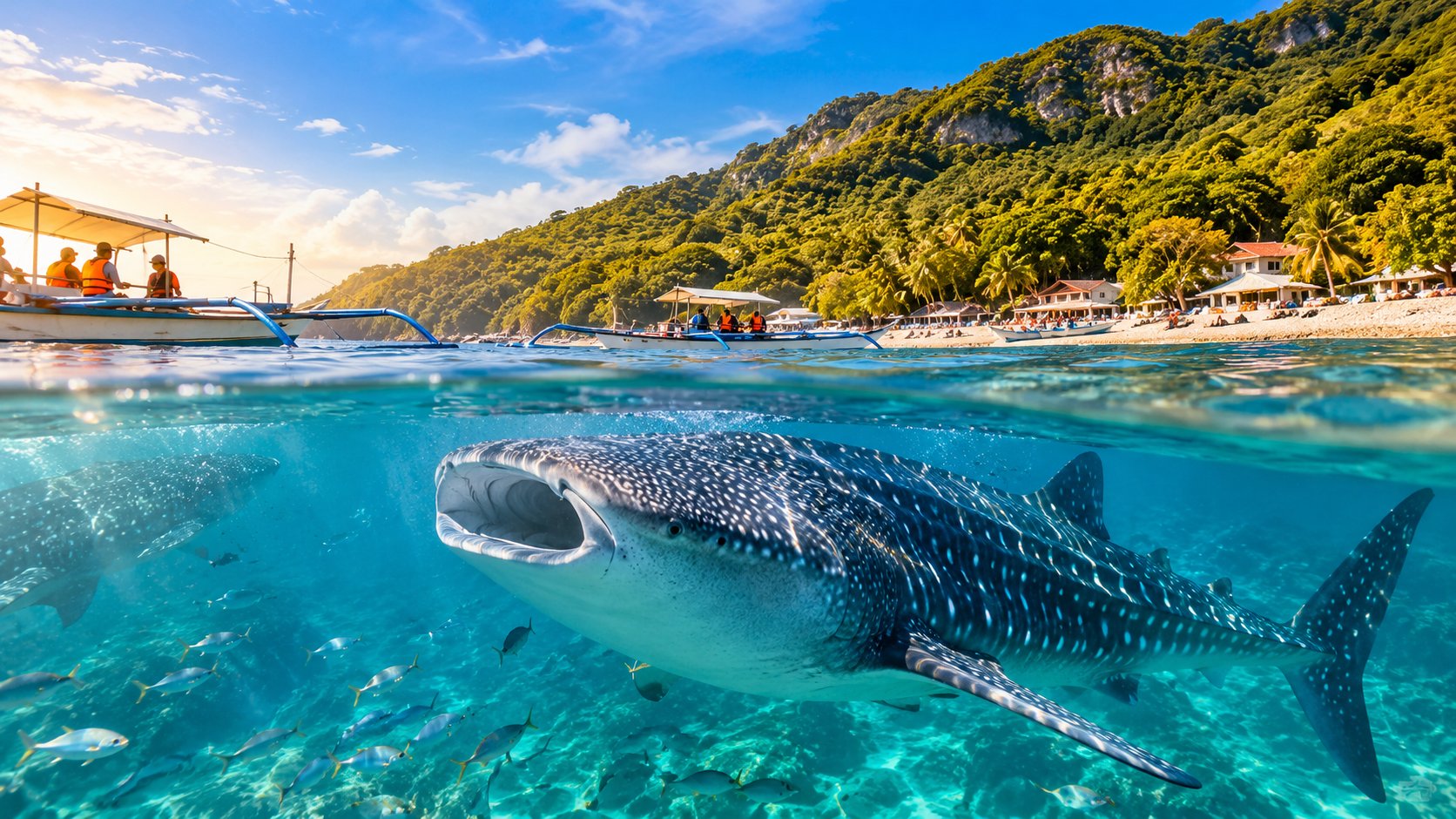
Oslob, Cebu/Philippines: Where the Morning Sea Comes Alive with Whale Sharks

2h ago(The Sightseer)
There is something unforgettable about waking up before sunrise just to meet a creature much larger than yourself.
That was how I imagined Oslob, and somehow, the real experience felt even more emotional. The road from Cebu City stretches south along the coast, passing quiet villages, small shops, churches, coconut trees, and glimpses of the sea. By the time I reached Tan-awan in Oslob, the sky was beginning to turn gold.
The main reason travelers come here is, of course, the whale shark experience. Oslob's whale shark interaction takes place in Barangay Tan-awan, where visitors can observe or snorkel near whale sharks during the early morning hours. The current operating window is generally 6:00 AM to 12:00 PM, with registration commonly closing around 11:00 AM.
I remember the strange feeling of anticipation before getting into the water. The sea looked almost ordinary until a huge shadow appeared beneath the surface.
For a moment, everything became quiet.
Meeting the Gentle Giants of Oslob
The whale sharks are enormous, but their movements are surprisingly peaceful. Watching one glide through the blue water felt almost dreamlike. Their spotted bodies moved slowly beneath the boats, reminding me how small we are compared with the world beneath the surface.
The standard interaction lasts around 30 minutes, following a safety briefing and local regulations. Visitors are expected to keep their distance, avoid touching the animals, avoid chasing or blocking them, and refrain from using sunscreen or insect repellent in the water.
It is also important to understand that Oslob's whale shark encounter is different from a completely wild wildlife encounter. The sharks are provisioned with food to attract them to the interaction area, a practice that has been discussed and debated by marine researchers because of its effects on natural behavior.
Knowing this made me appreciate the experience differently. Instead of simply chasing the perfect photograph, I found myself thinking more about how we, as visitors, should behave around wildlife.
Beyond the Whale Sharks: Oslob's Heritage
After leaving the water, I wanted to see another side of Oslob.
The town is more than a whale-shark destination. Oslob has a long cultural and religious history, with heritage sites such as the old parish church and Cuartel Ruins, remnants connected to the Spanish colonial period. The provincial tourism office also highlights Oslob's heritage, local festivals, waterfalls, beaches, and marine biodiversity as part of the municipality's wider identity.
is particularly interesting because it gives the journey a different rhythm. After spending the morning looking into the blue ocean, walking among old stone structures feels like stepping into another chapter of Cebu.
I loved that contrast: the sea representing something alive and constantly moving, while the ruins quietly hold memories of the past.
Island-Hopping Connections from Oslob
Oslob also works beautifully as part of a southern Cebu coastal journey.
After the whale shark experience, travelers can continue toward Sumilon Island, famous for its shifting white sandbar, clear water, and marine sanctuary. The island is accessible by boat from the Bangcogon area, making it an easy addition for travelers who want to continue their day on the water.
Another popular stop is , located only a few kilometers from the whale shark area. Its tall curtain of water creates a completely different atmosphere from the open sea.
For me, that is one of the charms of southern Cebu. One moment you are floating beside a whale shark, and a few hours later you can be standing beneath a waterfall or looking across an island sandbar.
A Taste of Local Cebu
After an early morning adventure, food somehow tastes better.
I would keep the meal simple and local rice, grilled seafood, soup, or a classic Filipino breakfast. Oslob's tourism office specifically highlights tola-tola, a local mixed broth or stew with a distinctive sour note, as one of the area's specialties.
For a casual local meal in town, places such as offer Filipino-style comfort food, while is another option for travelers looking for a relaxed meal.
There is something comforting about sitting down after the sea, eating warm rice and local food while watching everyday life continue around you.
How to Get to Oslob
From Cebu City, Oslob is roughly 116–117 km away. By private car, the journey generally takes around 3–3.5 hours, depending on traffic and road conditions. By public bus, the trip can take approximately 4–5 hours.
For the whale shark experience, leaving Cebu City very early around 3:00–4:00 AM is practical because the activity begins at 6:00 AM. Another option is to stay overnight in Oslob or nearby so you can arrive at Tan-awan without a long pre-dawn journey.
Budget travelers can take a Ceres bus from Cebu South Bus Terminal toward Oslob/Bato and then use local transport such as a tricycle to reach Tan-awan.
Best Time to Visit Oslob
Whale sharks can be encountered throughout the year, but the dry season from roughly December to May generally offers calmer conditions. The Cebu Provincial Tourism Office specifically recommends December to May, while early morning especially around 6:00–7:00 AM is useful for calmer water and fewer crowds.
Always check local conditions before traveling because operations can be affected by severe weather and sea conditions.
Whale Shark Fees
As of 2026, the commonly reported municipal rate is:
• Foreign visitors: around PHP 1,000 per person
• Filipino/local visitors: around PHP 500 per person
• The standard activity includes the regulated whale-shark interaction, with additional costs possible for optional services or arrangements.
Because local fees and regulations can change, it is wise to confirm the current rate at the official briefing center before your visit.
Travel Tips & Local Etiquette
Bring patience. Oslob can become busy, particularly during holidays and peak travel periods.
Most importantly, treat the whale sharks as wildlife rather than attractions. Do not touch, chase, or block them, maintain the required distance, and follow the briefing given by local guides. Avoid sunscreen and insect repellent before entering the water, and use a rash guard or protective clothing instead.
Respect the local community, keep noise and litter under control, dress appropriately when visiting heritage and religious sites, and support locally owned businesses when possible.
And don't forget to look beyond the famous attraction.
Walk through the old town. Notice the stone walls. Eat something you have never tried. Talk to a local. Take the boat to an island. Let the journey move a little slower.
Because Oslob is not only about swimming with whale sharks.
It is about a morning when the ocean feels enormous, an old town that quietly remembers its past, a boat carrying you toward another island, and a plate of warm Filipino food waiting after the adventure.
Sometimes the most meaningful travel memories are not the ones we plan perfectly.
They are the moments when we stop, breathe, and realize that for a few minutes, we are simply part of a much bigger world.
Practical Travel Tips
- How to get thereMost locations are accessible via central public transport or local taxi apps. Plan your route in advance.
- Best time to visitEarly morning or late afternoon to avoid peak crowds and capture the best lighting.
Local Culture
- Always ask for permission before taking photos of local residents.
- Carry small cash for traditional markets or street food vendors.
- Dress respectfully when visiting historical or religious sanctuaries.
Related Stories
No related stories found.
Top Experiences
No experiences found.
Forums Community
Join the forum community.
Upcoming Meetups
No meetups scheduled.
Inspired by this story?
Discover amazing local experiences and read more authentic travel journals from around the world.
Verified Real-World Travel Report
This travel story serves as a real-world case study for neighborhood exploration. The contributor has personally visited the site, verified transportation costs, and documented safety protocols to ensure accurate, resident-verified guidance for future community travelers.
Verified Sources & Geolocation References▼
This travel guide incorporates details verified against official geolocation databases and international guidelines: