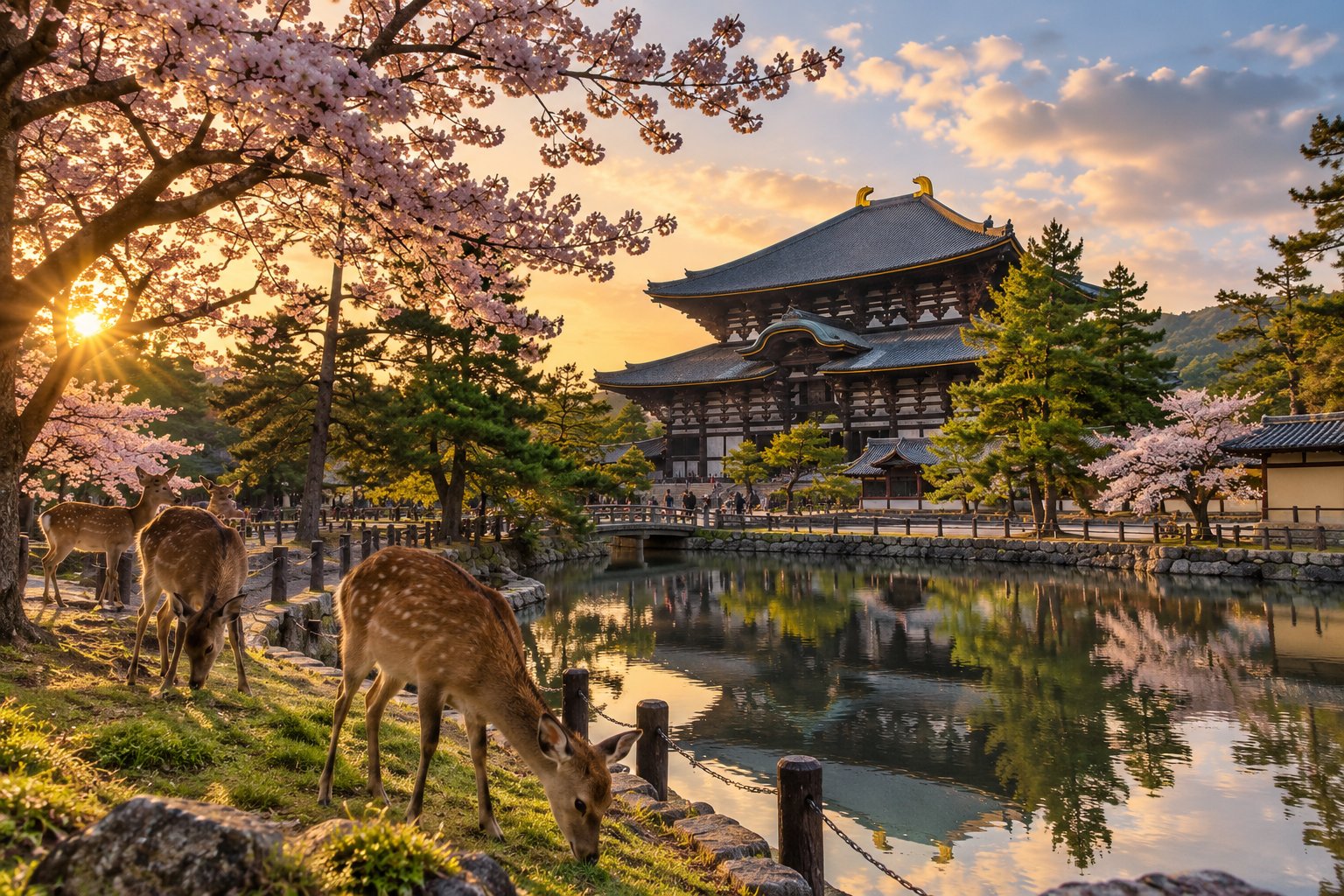
Nara Prefecture, Japan: Where Ancient Temples and Gentle Deer Slow Down Time

4h ago(The Sightseer)
There was something about Nara that made me slow down without even trying.
After the busy streets and bright lights of Japan's bigger cities, arriving in Nara felt like entering another rhythm. The sound of footsteps on old paths, the soft rustling of trees, the smell of incense near ancient temples, and the unexpected sight of deer wandering freely beside visitors made the whole day feel almost dreamlike.
My day began around Nara Park, one of the places that had been on my list for a long time. The park covers a huge area and is home to hundreds of free-roaming deer, with some of Nara's most important temples and shrines scattered throughout it.
The first deer I encountered was standing quietly near the pathway, completely unconcerned about the tourists walking around. I bought a packet of shika senbei, the special crackers made for the deer, and suddenly became very popular.
They approached quickly, sometimes bowing their heads as if politely asking for another cracker.
It was adorable, but also a reminder that these are still wild animals. I learned to finish the crackers before continuing and show my empty hands when I had nothing left.
Walking Through Nara's Ancient Temple Circuit
From Nara Park, I continued toward Todaiji Temple, one of Nara's most iconic landmarks.
The approach through Nandaimon Gate already felt impressive, but nothing prepared me for the Great Buddha Hall. Inside, the enormous bronze Buddha creates a feeling of silence even when there are many visitors around.
Todaiji is accessible from Kintetsu Nara Station in around 20 minutes on foot, or by bus from JR Nara Station or Kintetsu Nara Station. The current adult admission fee for the Great Buddha Hall is ¥800.
After Todaiji, I walked deeper into the park toward Kasuga Taisha Shrine.
The atmosphere changed almost immediately. The path became quieter, surrounded by towering trees and rows of stone lanterns. Occasionally, a deer appeared between the trees, making the walk feel almost magical.
Kasuga Taisha was established in 768 and is deeply connected with Nara's tradition of sacred deer. The shrine's forest setting, vermilion buildings, and lanterns made it one of the most atmospheric parts of the journey.
The grounds can be explored without paying an entrance fee, while special access to the Main Sanctuary currently costs ¥500 according to the Nara tourism guide.
A Quiet Moment Among the Lanterns
One of my favorite memories was simply walking without rushing.
There was no need to constantly take photos or follow a strict schedule. I just watched the deer, listened to the wind moving through the trees, and looked at the centuries-old architecture around me.
That was when I understood what made Nara different.
It wasn't just about visiting famous places. It was about experiencing the relationship between nature, spirituality, history, and daily life.
Traditional Japanese Sweets in Naramachi
After hours of walking, I headed toward Naramachi, Nara's traditional old-town area.
This was the perfect place to slow down again with a cup of tea and traditional Japanese sweets. Nara is known for delicate wagashi, beautifully crafted sweets that often use ingredients such as red bean paste, rice flour, and seasonal flavors.
One place I enjoyed discovering was , a traditional Japanese sweets shop and café in Naramachi.
There was something wonderfully simple about sitting down after a long temple walk, enjoying something sweet, and watching everyday life continue outside.
The experience reminded me that traveling isn't always about chasing spectacular views. Sometimes, the smallest things stay with you longer—a warm cup of tea, a delicate sweet, an old wooden storefront, or a quiet street where you can hear your own footsteps.
When to Visit Nara
Nara can be visited throughout the year, but spring and autumn are especially beautiful.
Spring brings cherry blossoms and fresh greenery, while autumn transforms the temple and forest landscapes with colorful foliage. May is also a notable time around Kasuga Taisha because of its wisteria.
For a quieter experience, I would start early in the morning. The temple circuit is much more peaceful before the busiest hours, and the soft morning light makes Nara Park especially beautiful.
Getting to Nara and Getting Around
Nara is particularly easy to reach from Kyoto and Osaka.
From Osaka-Namba, the Kintetsu Limited Express can reach Kintetsu Nara Station in roughly 35 minutes, while regular express services take only slightly longer. From Kyoto, Kintetsu trains can reach Nara in just over 30 minutes.
Once in Nara, many major attractions can be explored on foot. For longer distances, local buses are convenient, including the Nara Gurutto Bus, which has a ¥100 single-trip fare according to the prefectural walking map.
Walking, however, is part of the experience. The distance between temples, forests, old streets, and cafés is exactly what allows Nara to unfold naturally.
Cultural Tips for Visiting Nara
A few simple things make the experience more respectful:
• Only feed deer with official shika senbei; do not give them human food, plastic, or paper.
• Do not tease, chase, grab, or try to ride the deer. They are protected wild animals.
• Keep your voice low inside temples and shrines.
• Follow photography restrictions and signs, especially around worship areas.
• Avoid blocking temple entrances or pathways while taking photos.
• At Shinto shrines, observe the local etiquette for purification and prayer.
• Keep the temple and forest areas clean and take your rubbish with you.
Leaving Nara With a Slower Heart
By late afternoon, I found myself walking back through Nara Park one last time.
A deer stood quietly beside the path. Behind it were ancient trees, temple roofs, and the fading afternoon light.
Nara wasn't loud.
It didn't need to be.
The beauty was in the way everything seemed to coexist the deer wandering through an ancient landscape, temples standing quietly after centuries, traditional sweets still being made and enjoyed, and visitors from around the world stopping for a moment to appreciate it all.
I came to Nara expecting temples and deer.
I left remembering something much simpler: sometimes the best travel experiences are the ones that teach us to slow down.
Practical Travel Tips
- How to get thereMost locations are accessible via central public transport or local taxi apps. Plan your route in advance.
- Best time to visitEarly morning or late afternoon to avoid peak crowds and capture the best lighting.
Local Culture
- Always ask for permission before taking photos of local residents.
- Carry small cash for traditional markets or street food vendors.
- Dress respectfully when visiting historical or religious sanctuaries.
Related Stories
No related stories found.
Top Experiences
No experiences found.
Forums Community
Join the forum community.
Upcoming Meetups
No meetups scheduled.
Inspired by this story?
Discover amazing local experiences and read more authentic travel journals from around the world.
Verified Real-World Travel Report
This travel story serves as a real-world case study for neighborhood exploration. The contributor has personally visited the site, verified transportation costs, and documented safety protocols to ensure accurate, resident-verified guidance for future community travelers.
Verified Sources & Geolocation References▼
This travel guide incorporates details verified against official geolocation databases and international guidelines: