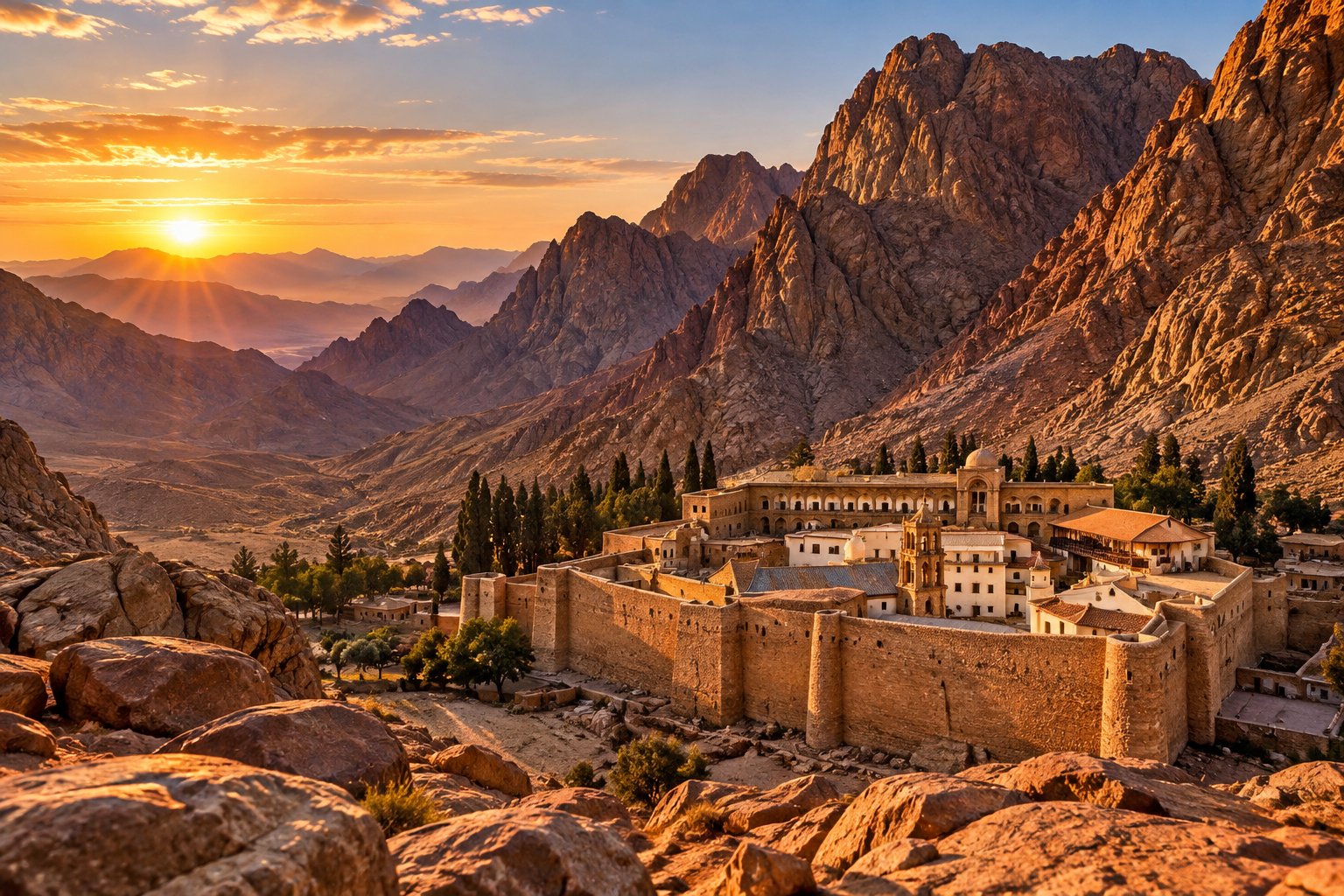
Mount Sinai & St. Catherine Monastery, South Sinai/Egypt: Where the Desert Feels Like a Prayer

4h ago(The Sightseer)
There are landscapes that make you stop taking photographs for a moment because you simply want to be there.
For me, South Sinai was one of those places.
The journey toward Mount Sinai took me away from Egypt’s busy cities and into a completely different world rugged mountains, wide desert valleys, dry air, and enormous skies that seemed to stretch forever. Somewhere among these mountains stands St. Catherine’s Monastery, an ancient Christian monastery that has continued its religious function since the 6th century.
The entire Saint Catherine Area was inscribed on the UNESCO World Heritage List in 2002 for its cultural and religious significance. The area is sacred to Christianity, Islam, and Judaism, and Mount Sinai also known as Jebel Musa or Mount Horeb is traditionally associated with the story of Moses receiving the Tablets of the Law.
But beyond its history, what moved me most was the landscape itself.
Walking Through the Ancient Landscape of Mount Sinai
The climb toward Mount Sinai is not simply a hike. It feels like walking through layers of history.
The mountain rises dramatically from the surrounding desert, and the traditional route includes the historic Path of Moses, with ancient religious remains along the way. Today, travelers can make the ascent on foot, often beginning before dawn to reach the summit around sunrise. Egypt’s official tourism site describes the pre-dawn trek as around 3–4 hours with Bedouin guides, depending on the route and conditions.
I would recommend starting early. The darkness makes every step feel more intentional, while the silence of the mountains creates a completely different atmosphere from ordinary sightseeing.
Then comes sunrise.
As the first light touches the rocky peaks, the desert changes from dark brown to gold. There is no dramatic soundtrack, no crowded city noise just mountains, wind, and the quiet feeling of standing somewhere deeply meaningful.
St. Catherine’s Monastery: History Behind Ancient Walls
At the foot of Mount Sinai stands St. Catherine’s Monastery, one of the oldest continuously functioning Christian monasteries in the world.
Its Byzantine walls have stood for centuries, protecting churches, religious treasures, manuscripts, icons, and sacred spaces. UNESCO describes the monastery as the oldest Christian monastery still operating for its original function.
Inside the complex, the Church of St. Catherine, the Burning Bush, and the monastery’s historic collections are among the major points of interest. The monastery also contains an important library with ancient manuscripts in several languages, while a mosque from the Fatimid period stands within the wider monastery complex.
Standing beside those old stone walls, I found myself thinking about how many generations had passed through the same landscape.
Some places don't need to be loud to tell their stories.
Desert Landscapes, Bedouin Evenings & Local Flavours
South Sinai is also about experiencing the desert beyond its famous religious sites.
After a day surrounded by mountains, spending an evening in a Bedouin-style setting can feel wonderfully simple. Sitting outside beneath a sky filled with stars, sharing tea, listening to stories, and enjoying traditional food creates a connection with the local culture that a quick sightseeing stop cannot provide.
Bedouin communities have lived in the Saint Catherine region for generations, maintaining traditional knowledge connected to the mountains, water sources, agriculture, and desert environment. UNESCO highlights the cultural heritage and traditions of the local Gebaliya Bedouin community as an important part of the area.
A warm cup of Bedouin tea, simple grilled meat, rice, bread, salads, and locally prepared dishes somehow taste better after a long day in the mountains.
And then there is the silence.
That silence might be my favourite part.
From Sacred Mountains to the Red Sea
If you have extra time in South Sinai, I would not stop the journey at Mount Sinai.
The region is also known for its Red Sea coastline, where snorkeling and diving offer a completely different side of Sinai. After walking through dry mountains and desert valleys, entering the clear blue water feels almost surreal.
Snorkeling among coral reefs and colorful marine life creates a beautiful contrast: above the surface, the landscape is dry and rocky; beneath it, another world is alive with color.
This combination is what makes South Sinai memorable to me the mountains, desert, sea, history, and people all feel like different chapters of the same journey.
Practical Guide to Visiting Mount Sinai & St. Catherine’s Monastery
How to Get There
St. Catherine is located in South Sinai and can be reached by road from destinations such as Sharm El-Sheikh, Dahab, or Taba. Egypt’s official tourism site notes that St. Catherine Monastery is approximately a two-hour drive from Taba.
For Mount Sinai hikes, arranging transportation and a local Bedouin guide through an established local operator or accommodation is a practical option, particularly for pre-dawn climbs.
Summer can be extremely hot, particularly during daytime desert activities, so early-morning hikes are preferable.
Tickets & Costs
Entrance arrangements and fees can change depending on the specific attraction, tour, guide, or activity. Rather than relying on an outdated fixed price, check the current arrangements with the monastery, local authorities, or your tour operator before visiting.
A guided Mount Sinai trek may involve separate transportation and guide costs.
Main Spots to Explore
• Mount Sinai / Jebel Musa – sunrise hiking and panoramic mountain views.
• St. Catherine’s Monastery – Byzantine architecture, religious art, manuscripts, and sacred heritage.
• Burning Bush – an important religious site within the monastery complex.
• Mount St. Catherine – Egypt’s highest mountain and a challenging hiking destination.
• Saint Catherine mountain valleys – ideal for trekking and experiencing the desert landscape.
• Red Sea coastline – snorkeling and diving around South Sinai.
• Bedouin camps and desert gatherings – for traditional tea, food, conversation, and stargazing.
Cultural Tips & Local Etiquette
Dress respectfully, especially when visiting religious sites. Cover shoulders and knees and follow any specific clothing requirements given at the monastery.
Keep your voice low around places of worship and always follow photography restrictions. Do not touch religious objects or enter restricted areas without permission.
When spending time with Bedouin communities, approach the experience with respect and curiosity rather than treating local traditions simply as entertainment. Ask before photographing people, homes, ceremonies, or private gatherings.
Most importantly, leave the mountains exactly as you found them. The Saint Catherine landscape is fragile, and responsible tourism helps protect both its natural environment and cultural heritage.
A Journey I Would Remember for a Long Time
When I think back on Mount Sinai, I don't remember only the summit.
I remember the footsteps in the darkness.
The cold mountain air before sunrise.
The golden light slowly spreading across the desert.
The ancient walls of St. Catherine’s Monastery.
The warmth of Bedouin tea after a long day.
And later, the completely different feeling of floating above the Red Sea, watching another world move beneath the surface.
South Sinai taught me that travel doesn't always have to be about chasing the next attraction.
Sometimes, the most meaningful journeys are the ones that make you slow down.
And somewhere between the sacred mountain, the silent desert, the kindness of local people, and the blue waters of the Red Sea, I found exactly that.
Practical Travel Tips
- How to get thereMost locations are accessible via central public transport or local taxi apps. Plan your route in advance.
- Best time to visitThe cooler months from **October to April** are generally more comfortable for hiking and exploring the desert. Winter mornings can be very cold at higher elevations, so warm layers are essential.
Local Culture
- Always ask for permission before taking photos of local residents.
- Carry small cash for traditional markets or street food vendors.
- Dress respectfully when visiting historical or religious sanctuaries.
Related Stories
No related stories found.
Top Experiences
No experiences found.
Forums Community
Join the forum community.
Upcoming Meetups
No meetups scheduled.
Inspired by this story?
Discover amazing local experiences and read more authentic travel journals from around the world.
Verified Real-World Travel Report
This travel story serves as a real-world case study for neighborhood exploration. The contributor has personally visited the site, verified transportation costs, and documented safety protocols to ensure accurate, resident-verified guidance for future community travelers.
Verified Sources & Geolocation References▼
This travel guide incorporates details verified against official geolocation databases and international guidelines: