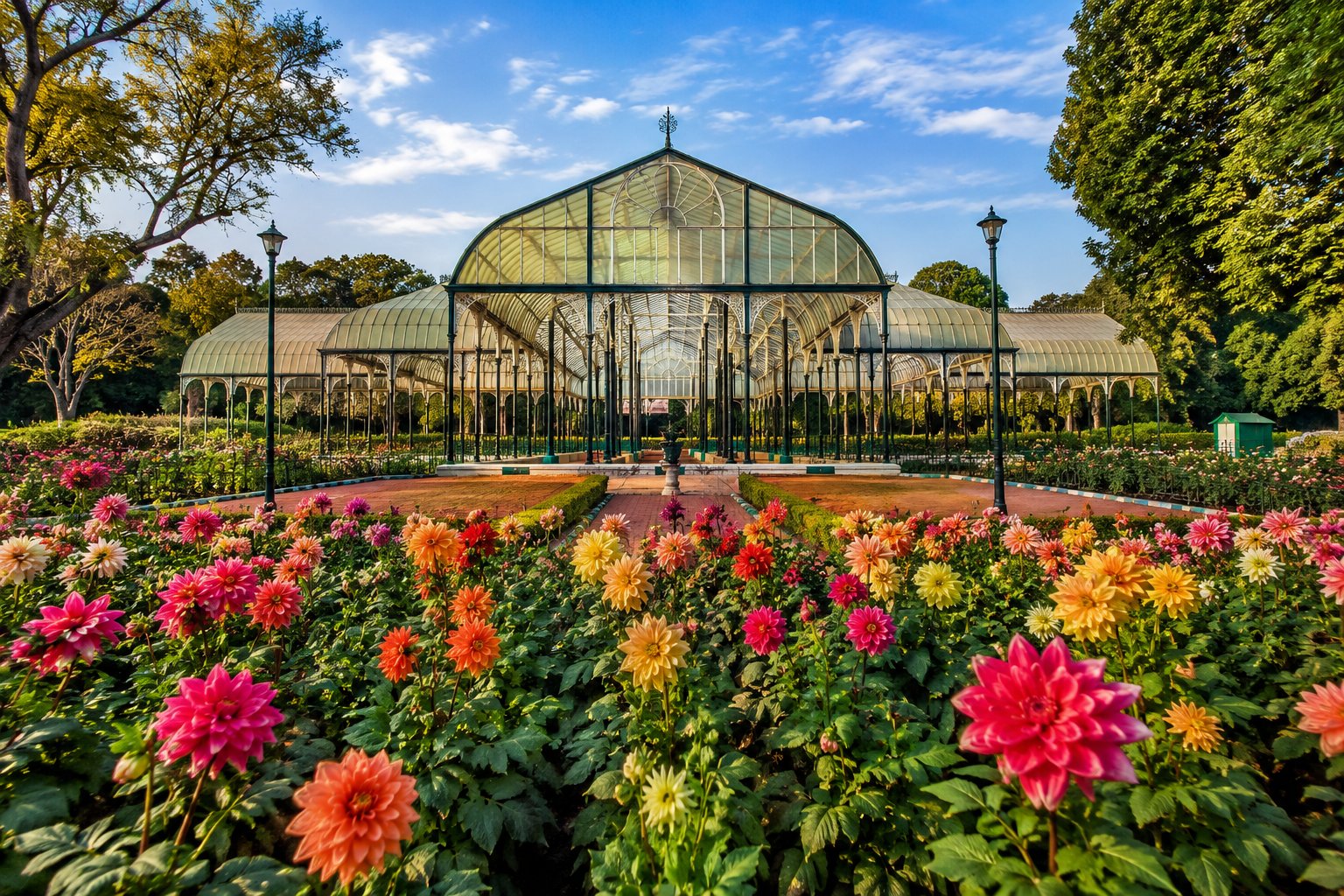
Lalbagh Botanical Garden & Cubbon Park, Bangalore, India: Finding Silence Between the Trees of a Restless City

June 3, 2026(The Sightseer)
Bangalore is often described as India's technology capital, a city of startups, innovation, and endless traffic. But beneath the layers of concrete and glass lies a softer side of the city.
I discovered that side during a slow morning walk through Lalbagh Botanical Garden and a peaceful afternoon beneath the giant trees of Cubbon Park.
For a few hours, the city disappeared.
The horns faded into the distance.
And all that remained was the sound of rustling leaves.
Why Visit Lalbagh Botanical Garden and Cubbon Park?
Known as the "lungs of Bangalore," Lalbagh Botanical Garden and Cubbon Park offer a refreshing escape from urban life.
These two iconic green spaces are home to:
👉🏻 Rare plant collections
👉🏻 Centuries-old trees
👉🏻 Beautiful walking trails
👉🏻 Native birds and wildlife
👉🏻 Historic monuments and structures
👉🏻 Peaceful picnic and relaxation spots
Whether you're a nature lover, photographer, runner, or simply looking for a quiet place to unwind, both parks provide a different perspective of Bangalore.
My Morning Among the Ancient Trees of Lalbagh
Arriving Before the City Fully Woke Up
I arrived at Lalbagh shortly after sunrise.
The air was cool, something I hadn't expected in a bustling Indian metropolis.
Morning walkers moved quietly along shaded paths while elderly locals practiced yoga beneath towering trees.
Unlike many tourist attractions, Lalbagh felt deeply local.
People weren't rushing.
They were simply enjoying the morning.
And somehow, that made me slow down too.
The Glass House and a Garden Full of History
One of Lalbagh's most famous landmarks is the Glass House, inspired by London's Crystal Palace.
Standing in front of it, I could imagine the countless flower shows and community gatherings that had taken place here over the years.
But what impressed me most wasn't the architecture.
It was the trees.
Some of them have stood here for more than a century.
Their roots seemed to hold stories older than the city itself.
Walking beneath their vast canopies felt surprisingly humbling.
Rare Plants, Quiet Paths, and Unexpected Wildlife
Lalbagh is home to more than a thousand species of plants.
Every turn revealed something different.
Towering bamboo groves.
Flowering shrubs.
Palm-lined pathways.
Small ponds reflecting the morning sky.
At one point, I stopped simply to watch a kingfisher perched near the water.
For several minutes, nothing happened.
And yet it felt like one of the most memorable moments of the day.
An Afternoon Escape Inside Cubbon Park
The Green Heart of Bangalore
After exploring Lalbagh, I headed toward Cubbon Park, located in the center of Bangalore.
If Lalbagh felt like a botanical museum, Cubbon Park felt like a living urban forest.
Massive rain trees stretched over roads and walking paths, creating natural tunnels of shade.
The atmosphere was relaxed.
Families spread blankets on the grass.
Cyclists cruised past.
Students sat beneath trees reading books.
Everyone seemed to have found their own little corner of peace.
When the City Disappears
One of the most surprising things about Cubbon Park is how effectively it hides the city around it.
Skyscrapers stand nearby.
Major roads surround it.
Yet inside the park, birdsong often becomes louder than traffic.
I spent nearly an hour sitting beneath a giant tree without checking my phone.
That rarely happens when I travel.
But Cubbon Park encourages a different pace.
A slower one.
A more human one.
A Place That Locals Truly Love
Many parks around the world become tourist attractions first and community spaces second.
Cubbon Park feels different.
It remains part of everyday life in Bangalore.
Watching children play, runners pass by, and families gather reminded me that travel isn't always about finding something extraordinary.
Sometimes it's about experiencing how ordinary life unfolds in a different place.
Best Time to Visit Lalbagh and Cubbon Park
Recommended Season
The best time to visit is between:
October to February
During these months, temperatures are pleasant and ideal for walking outdoors.
Weather Overview
Season Experience
October – February : Cool, comfortable, best for sightseeing
March – May : Warmer afternoons
June – September : Green scenery with occasional rain
Entrance Fees and Opening Hours
Lalbagh Botanical Garden
Entry Fee
👉🏻 Approximately ₹30–50 per adult
👉🏻 Additional charges may apply during special flower shows
Opening Hours
👉🏻 Generally open from early morning until evening
Cubbon Park
Entry Fee
👉🏻 Free
Opening Hours
👉🏻 Open daily
👉🏻 Best enjoyed during morning or late afternoon
Fees and schedules may change over time. Check official local sources before visiting.
Transportation Tips
Getting to Lalbagh
👉🏻 Metro: Lalbagh Metro Station provides convenient access.
👉🏻 Auto-rickshaw and ride-hailing services are widely available.
👉🏻 Early morning visits help avoid traffic.
Getting to Cubbon Park
👉🏻 Metro: Cubbon Park Station and nearby stations offer easy access.
👉🏻 Walking from central Bangalore attractions is possible.
👉🏻 Weekends often attract more visitors.
Local Culture and Etiquette
Respecting Bangalore's Green Spaces
While visiting these parks:
👉🏻 Avoid littering.
👉🏻 Keep noise levels low.
👉🏻 Respect jogging and walking paths.
👉🏻 Ask permission before photographing people.
👉🏻 Follow instructions during flower exhibitions and special events.
Many locals visit these parks for exercise, meditation, and family time. Respecting the peaceful atmosphere helps preserve the experience for everyone.
Travel Tips for First-Time Visitors
Bring:
👉🏻 Comfortable walking shoes
👉🏻 Water bottle
👉🏻 Sunscreen
👉🏻 Camera or smartphone
👉🏻 Light rain jacket during monsoon season
For the Best Experience:
👉🏻 Visit Lalbagh shortly after sunrise.
👉🏻 Explore Cubbon Park during the late afternoon.
👉🏻 Allow at least half a day to enjoy both locations.
👉🏻 Take time to sit and observe instead of rushing between attractions.
Final Thoughts
I arrived expecting two beautiful parks.
I left with something much more meaningful.
Lalbagh Botanical Garden and Cubbon Park showed me a side of Bangalore that doesn't appear in technology headlines or business districts.
A quieter side.
A greener side.
A side where ancient trees continue to stand patiently while the city grows around them.
For a few hours, I traded noise for birdsong, deadlines for shaded pathways, and crowded streets for open spaces.
And in a city that never truly stops moving, that felt like the most valuable discovery of all.
Practical Travel Tips
- How to get thereMost locations are accessible via central public transport or local taxi apps. Plan your route in advance.
- Best time to visitEarly morning or late afternoon to avoid peak crowds and capture the best lighting.
Local Culture
- Always ask for permission before taking photos of local residents.
- Carry small cash for traditional markets or street food vendors.
- Dress respectfully when visiting historical or religious sanctuaries.
Related Stories
No related stories found.
Top Experiences
No experiences found.
Forums Community
Join the forum community.
Upcoming Meetups
No meetups scheduled.
Inspired by this story?
Discover amazing local experiences and read more authentic travel journals from around the world.
Verified Real-World Travel Report
This travel story serves as a real-world case study for neighborhood exploration. The contributor has personally visited the site, verified transportation costs, and documented safety protocols to ensure accurate, resident-verified guidance for future community travelers.
Verified Sources & Geolocation References▼
This travel guide incorporates details verified against official geolocation databases and international guidelines: