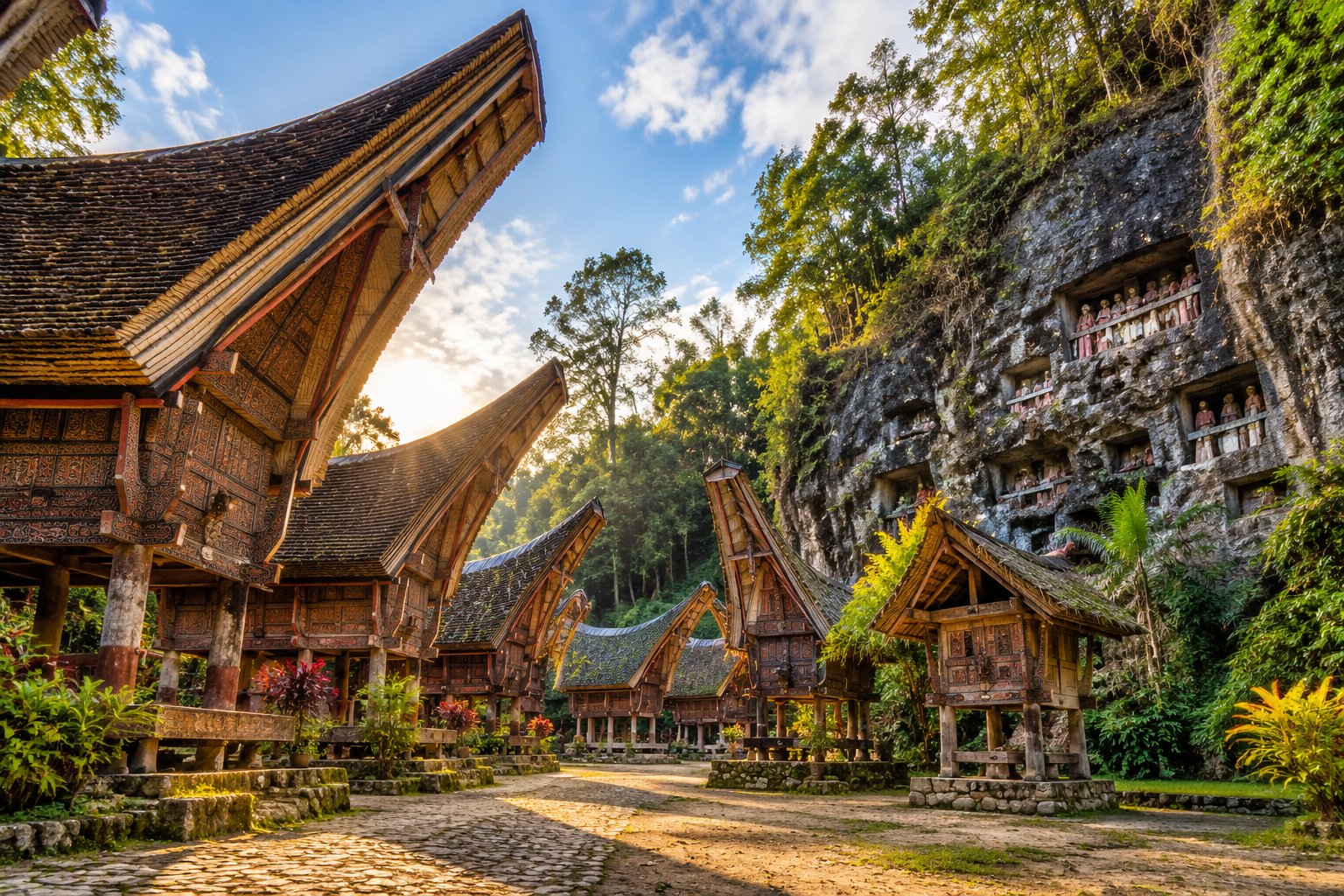
Ke'te Kesu, Toraja, Indonesia: A Journey Into the Ancient Village Where Time Still Whispers

September 4, 2026(The Sightseer)
The first time I arrived at Ke'te Kesu, I felt like I had stepped into a different chapter of history. The road slowly led me through the green landscapes of Toraja, where misty mountains, rice fields, and traditional villages painted a peaceful picture of rural Indonesia.
Located in North Toraja Regency, South Sulawesi, Ke'te Kesu is more than just a beautiful tourist destination. It is a living cultural heritage where generations of Torajan people continue to preserve their traditions, architecture, and spiritual connection with their ancestors.
Walking into the village, my eyes were immediately drawn to the magnificent Tongkonan, the traditional Torajan ancestral houses with their iconic boat-shaped roofs. Each wooden wall was decorated with colorful carvings filled with deep meanings about life, prosperity, family, and social values. Beside them stood rows of Alang, traditional rice barns that represent the importance of agriculture and community in Torajan life.
The atmosphere was calm and meaningful. It was not only about taking photos but about understanding the stories hidden behind every carving and structure.
Exploring The Traditional Beauty of Ke'te Kesu Village
One of the most unforgettable experiences in Ke'te Kesu was visiting the ancient burial site located behind the village. The limestone cliffs hold centuries-old graves where wooden statues called Tau Tau stand as symbolic representations of the ancestors.
The peaceful yet mysterious atmosphere reminded me that in Toraja culture, death is not simply an ending. It is a continuation of the relationship between families, ancestors, and the spiritual world.
Walking around the cliff area, listening to the quiet sounds of nature, and observing the traditional burial practices gave me a deeper appreciation of how strongly the Torajan people protect their heritage.
Authentic Experiences With Local Torajan Culture
During my visit, I enjoyed slowing down and connecting with the local atmosphere. I watched local people maintain their traditional houses, learned about the meanings behind Tongkonan carvings, and experienced the warm hospitality of Torajan communities.
The best part of traveling to Ke'te Kesu was realizing that every corner had a story. The village was not created only for visitors but remains a meaningful home for the people who continue their ancestors’ traditions.
For travelers who love cultural journeys, photography, history, and authentic experiences, Ke'te Kesu offers a rare opportunity to witness Indonesia’s living heritage.
How To Visit Ke'te Kesu
Transportation:
The easiest way to reach Ke'te Kesu is by traveling to Rantepao, the main town of North Toraja. From Makassar, travelers can take a bus or private car with a journey of approximately 8–10 hours through scenic mountain roads. From Rantepao, Ke'te Kesu can be reached by motorcycle, local transport, or private vehicle in around 15–20 minutes.
Best Time To Visit:
The best time to visit Ke'te Kesu is during the dry season from May to October when the weather is more comfortable for exploring villages and outdoor areas. Morning visits are recommended to enjoy cooler temperatures and softer natural light for photography.
Entrance Fee:
The entrance fee may change over time, but visitors should prepare around IDR 10,000–20,000 per person for local tourism fees. Additional costs may apply for parking or local services.
Cultural Tips For Visiting Ke'te Kesu
• Dress respectfully, especially when visiting traditional and sacred areas.
• Ask permission before photographing local people or ceremonies.
• Avoid touching traditional objects or entering houses without permission.
• Respect burial sites and remember that they are sacred places, not only tourist attractions.
• Take time to interact politely with local residents and learn about their traditions.
Ke'te Kesu is a reminder that travel is not only about discovering beautiful places but also about understanding the stories, beliefs, and memories that shape a community. In this ancient Torajan village, every wooden carving, stone cliff, and traditional house carries a message from the past — waiting quietly for travelers to listen.
Practical Travel Tips
- How to get thereMost locations are accessible via central public transport or local taxi apps. Plan your route in advance.
- Best time to visitEarly morning or late afternoon to avoid peak crowds and capture the best lighting.
Local Culture
- Always ask for permission before taking photos of local residents.
- Carry small cash for traditional markets or street food vendors.
- Dress respectfully when visiting historical or religious sanctuaries.
Related Stories
No related stories found.
Top Experiences
No experiences found.
Forums Community
Join the forum community.
Upcoming Meetups
No meetups scheduled.
Inspired by this story?
Discover amazing local experiences and read more authentic travel journals from around the world.
Verified Real-World Travel Report
This travel story serves as a real-world case study for neighborhood exploration. The contributor has personally visited the site, verified transportation costs, and documented safety protocols to ensure accurate, resident-verified guidance for future community travelers.
Verified Sources & Geolocation References▼
This travel guide incorporates details verified against official geolocation databases and international guidelines: