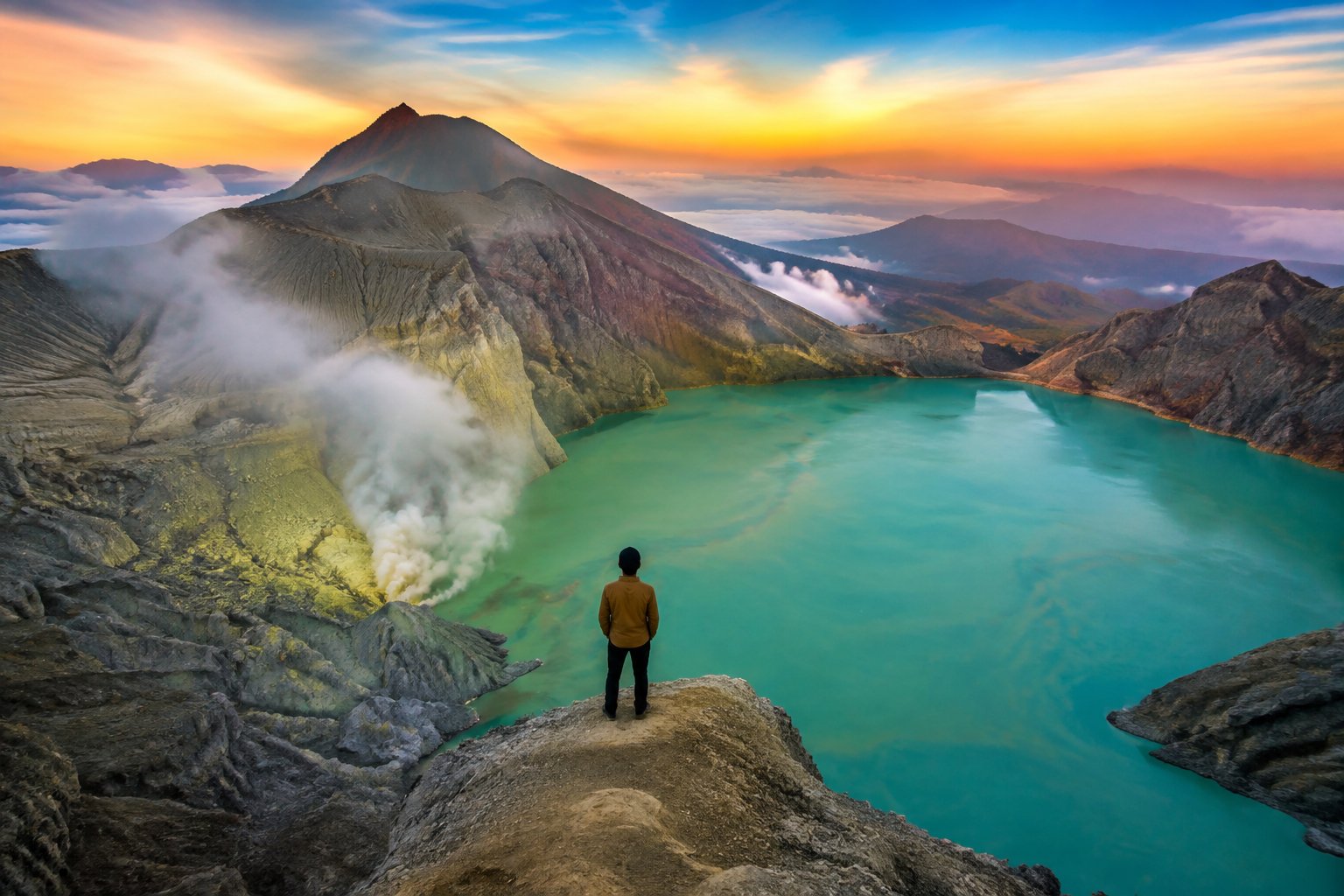
Kawah Ijen, Banyuwangi/Indonesia: A Blue Flame Journey Into the Heart of Nature Story Excerpt

August 21, 2026(The Sightseer)
Chasing the Blue Fire and Sunrise at Kawah Ijen, Banyuwangi
I arrived in Banyuwangi with a heart full of curiosity and a desire to experience one of Indonesia’s most extraordinary natural wonders. My journey to Kawah Ijen began before dawn, when the quiet mountain roads were covered in darkness and the cool air carried the scent of the forest. The adventure felt almost magical, as if I was entering a hidden world waiting to reveal its secrets.
Kawah Ijen is not just a volcanic destination; it is a place where nature, culture, and human resilience meet. Located on the border of Banyuwangi and Bondowoso in East Java, this active volcano is famous for its turquoise acidic crater lake and the rare blue fire phenomenon that can only be seen in a few places around the world.
A Night Trek Into the Volcano’s Soul
My journey started from Paltuding Base Camp, the main entrance to Kawah Ijen. I chose to hike during the early morning hours because the trail is more comfortable, and it gives travelers a chance to witness the famous blue flames before sunrise.
The hike took around 1.5 to 2 hours through a steep mountain path. Every step felt challenging, but the peaceful atmosphere, the sound of the forest, and the stars above made the experience unforgettable. Along the way, I met local sulfur miners carrying heavy loads of sulfur from the crater. Their dedication and strength reminded me that Kawah Ijen is not only about beautiful scenery but also about the lives and stories of the people who call this mountain their workplace.
Experiencing Local Culture and Authentic Moments
One of the most meaningful parts of my visit was connecting with the local community. The miners, guides, and residents of Banyuwangi showed incredible warmth and humility. Many travelers come for the view, but the real beauty of Kawah Ijen comes from the human stories behind the landscape.
After completing the hike, I explored Banyuwangi’s local culture, tasted traditional East Javanese food, and learned about the traditions of the Osing people, the indigenous community of Banyuwangi. Their unique language, music, and hospitality added another layer to my journey.
Travel Information for Kawah Ijen
Transportation:
The easiest way to reach Kawah Ijen is by traveling to Banyuwangi. From Banyuwangi city, travelers can rent a motorcycle, hire a private driver, or join a guided tour to Paltuding Base Camp. The journey from Banyuwangi city takes approximately 1.5–2 hours by car.
Best time to visit:
The best time to visit Kawah Ijen is during the dry season, usually from April to October. For the blue fire experience, travelers should arrive around midnight and start hiking around 1:00 AM–2:00 AM. Sunrise views are usually best around 5:00 AM–6:00 AM.
Ticket and costs:
The entrance fee for international visitors is approximately IDR 100,000 on weekdays and IDR 150,000 on weekends or holidays. Additional costs may include transportation, guides, parking, and personal equipment.
Tips for Respectful Travel
Travelers should bring warm clothing because temperatures at the mountain can be very cold, especially at night. A mask or protective gear is recommended because sulfur smoke near the crater can be strong.
Respecting local culture is important. Always ask permission before photographing sulfur miners or local residents. Supporting local guides, small restaurants, and community businesses is a simple way to contribute to Banyuwangi’s tourism.
Walking through Kawah Ijen taught me that travel is not only about reaching a destination. It is about understanding the stories, struggles, and beauty that exist along the way. Standing above the crater as the first sunlight touched the turquoise lake, I felt grateful for a journey that connected me with nature and humanity.
Practical Travel Tips
- How to get thereMost locations are accessible via central public transport or local taxi apps. Plan your route in advance.
- Best time to visitEarly morning or late afternoon to avoid peak crowds and capture the best lighting.
Local Culture
- Always ask for permission before taking photos of local residents.
- Carry small cash for traditional markets or street food vendors.
- Dress respectfully when visiting historical or religious sanctuaries.
Related Stories
No related stories found.
Top Experiences
No experiences found.
Forums Community
Join the forum community.
Upcoming Meetups
No meetups scheduled.
Inspired by this story?
Discover amazing local experiences and read more authentic travel journals from around the world.
Verified Real-World Travel Report
This travel story serves as a real-world case study for neighborhood exploration. The contributor has personally visited the site, verified transportation costs, and documented safety protocols to ensure accurate, resident-verified guidance for future community travelers.
Verified Sources & Geolocation References▼
This travel guide incorporates details verified against official geolocation databases and international guidelines: