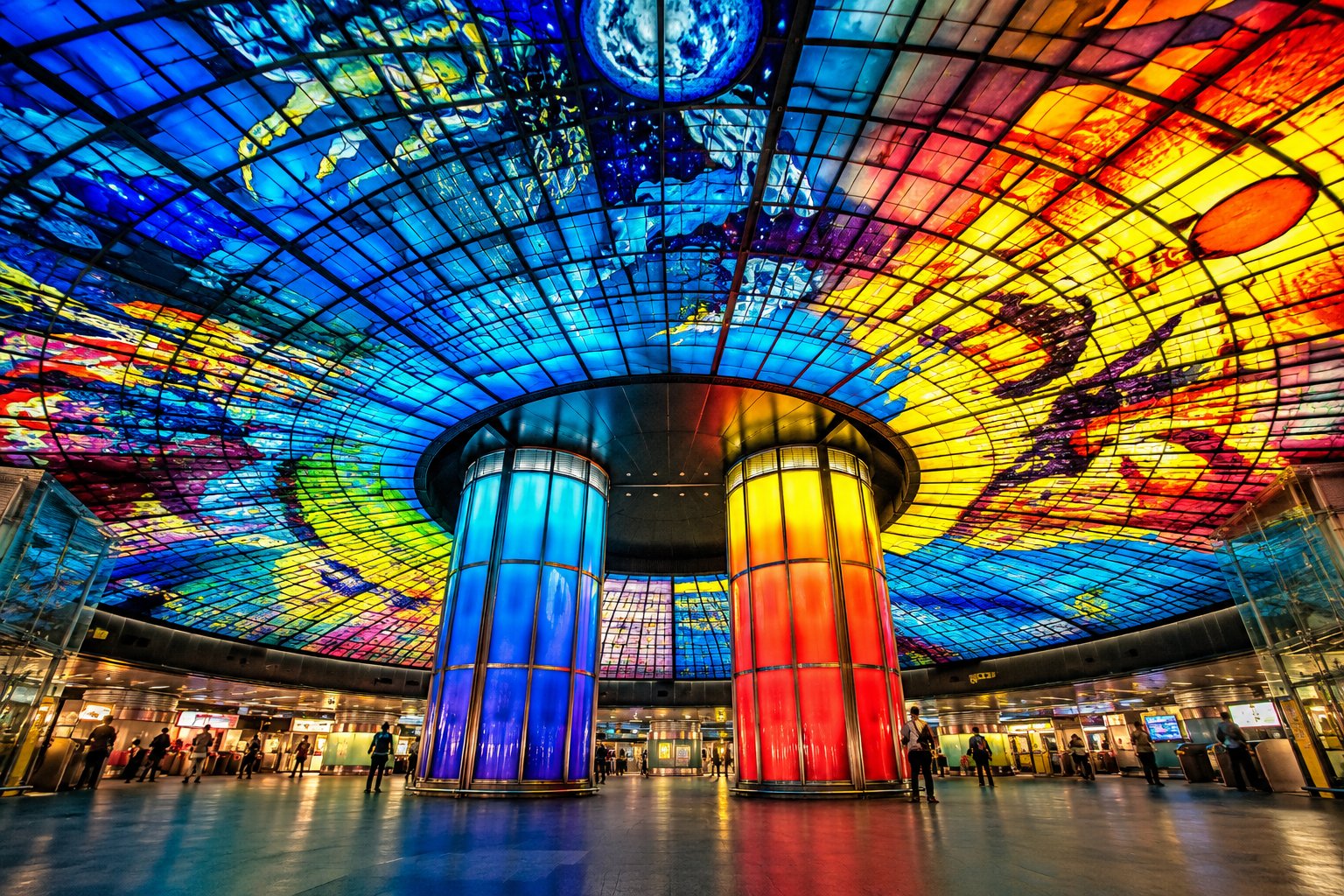
Dome of Light, Kaohsiung/Taiwan: A Rainbow Beneath the City
1h ago(The Sightseer)
I didn't expect one of my most memorable moments in Kaohsiung to happen underground.
I arrived at Formosa Boulevard Station, one of the city's main MRT interchange stations, with no big expectations beyond taking the train and continuing my day. But as soon as I entered the station concourse, I looked up and stopped.
Above me was the Dome of Light, an enormous public art installation made from glass, color, and light. Created by Italian artist Narcissus Quagliata, the artwork measures around 30 meters in diameter and was completed over four and a half years. Its imagery represents different stages of existence, from the birth and growth of the cosmos to glory and eventual fading.
For a few minutes, I simply stood there.
The colors changed as the light moved across the glass, creating reflections that felt almost like a quiet sunrise beneath the city. Around me, commuters continued walking, trains arrived and departed, and announcements echoed through the station. Yet somehow, everything felt peaceful.
Exploring Kaohsiung Beyond the Dome
What I loved most about visiting Formosa Boulevard was that the experience didn't have to end underground.
The station is where the Kaohsiung MRT Red Line and Orange Line meet, making it one of the easiest places to include in a city itinerary.
From here, I could slowly explore Kaohsiung's neighborhoods, wander toward local markets, and experience the city at street level.
One of the best combinations is to visit the Dome of Light during the day and then explore Liuhe Tourist Night Market in the evening. Several station exits lead toward the night market area, making it easy to combine art, transportation, street food, and local life in one journey.
Walking through a Kaohsiung night market is a completely different experience from standing beneath the Dome.
The quiet colors of the glass are replaced by sizzling food, bright signs, conversations, scooters passing by, and the smell of Taiwanese street food. I would happily spend the evening trying local dishes, from grilled seafood and fried snacks to refreshing drinks and sweet treats.
And when I wanted something slower, Kaohsiung's harbor area offered another side of the city. A relaxed harbour walk felt like the perfect contrast water, evening air, city lights, and the unmistakable atmosphere of a port city.
Contemporary Art in an Unexpected Place
What makes the Dome of Light special to me is not simply its size or colors.
It reminded me that art doesn't always need to be inside a museum.
Here, art becomes part of everyday life. People walk beneath it on their way to work. Travelers stop to take photographs. Friends meet at the station. Commuters transfer between MRT lines.
The station itself was designed as a major urban landmark, with artistic elements both above and below ground. The glass structures at the station entrances were designed around the theme of prayer and hope, while the Dome of Light adds another layer of artistic meaning beneath the city.
That combination of public transportation and contemporary art is something I found deeply beautiful about Kaohsiung.
How to Get There
The easiest way to visit the Dome of Light is by Kaohsiung MRT.
Take the Red Line or Orange Line to Formosa Boulevard Station (R10/O5). The station is located at No. 115, Zhongshan 1st Road, Sinsing District, Kaohsiung City.
You don't need to travel somewhere remote or arrange a special tour. The artwork is inside the MRT station itself.
The station currently operates from approximately 05:55 to 00:25, although train schedules and operating arrangements can vary.
Start with the Dome of Light while exploring the station, then continue outside for a harbor walk before ending the day at a night market.
This gives the trip a natural rhythm: colorful art underground, warm evening light by the harbor, and lively street food after dark.
Ticket Price and Costs
The Dome of Light itself is free to visit. There is no separate admission ticket for the artwork.
You only need to pay the normal fare for your Kaohsiung MRT journey.
My Tips for Visiting
Take your time beneath the Dome instead of simply taking one photograph and leaving.
Look at the artwork from different angles and notice how the colors interact with the light.
Since this is an active MRT station, remember that it is also a working public transportation space. Avoid blocking walkways, keep noise reasonable, and be mindful of commuters when taking photos.
And when exploring the night markets, bring some cash and be open to trying something unfamiliar. Sometimes the most memorable travel moments come from ordering something you can't pronounce and discovering that you actually love it.
A Small Memory Beneath a Big City
When I think about Kaohsiung now, I don't only remember the harbor or the food.
I remember looking up inside Formosa Boulevard Station and seeing a universe made of glass.
The Dome of Light reminded me that cities have their own kind of poetry. Sometimes it is found beside the ocean. Sometimes it is hidden inside a night market. And sometimes, unexpectedly, it is waiting beneath your feet while thousands of people simply go about their day.
For me, that was the magic of Kaohsiung a city where everyday life and art seem to meet naturally.
And perhaps that's why I would return.
Not just to see the Dome again, but to stand beneath those colors for a few quiet minutes and remember how beautiful it feels to be somewhere new.
Practical Travel Tips
- How to get thereMost locations are accessible via central public transport or local taxi apps. Plan your route in advance.
- Best time to visitI would visit **late afternoon toward evening**.
Local Culture
- Always ask for permission before taking photos of local residents.
- Carry small cash for traditional markets or street food vendors.
- Dress respectfully when visiting historical or religious sanctuaries.
Related Stories
No related stories found.
Top Experiences
No experiences found.
Forums Community
Join the forum community.
Upcoming Meetups
No meetups scheduled.
Inspired by this story?
Discover amazing local experiences and read more authentic travel journals from around the world.
Verified Real-World Travel Report
This travel story serves as a real-world case study for neighborhood exploration. The contributor has personally visited the site, verified transportation costs, and documented safety protocols to ensure accurate, resident-verified guidance for future community travelers.
Verified Sources & Geolocation References▼
This travel guide incorporates details verified against official geolocation databases and international guidelines: