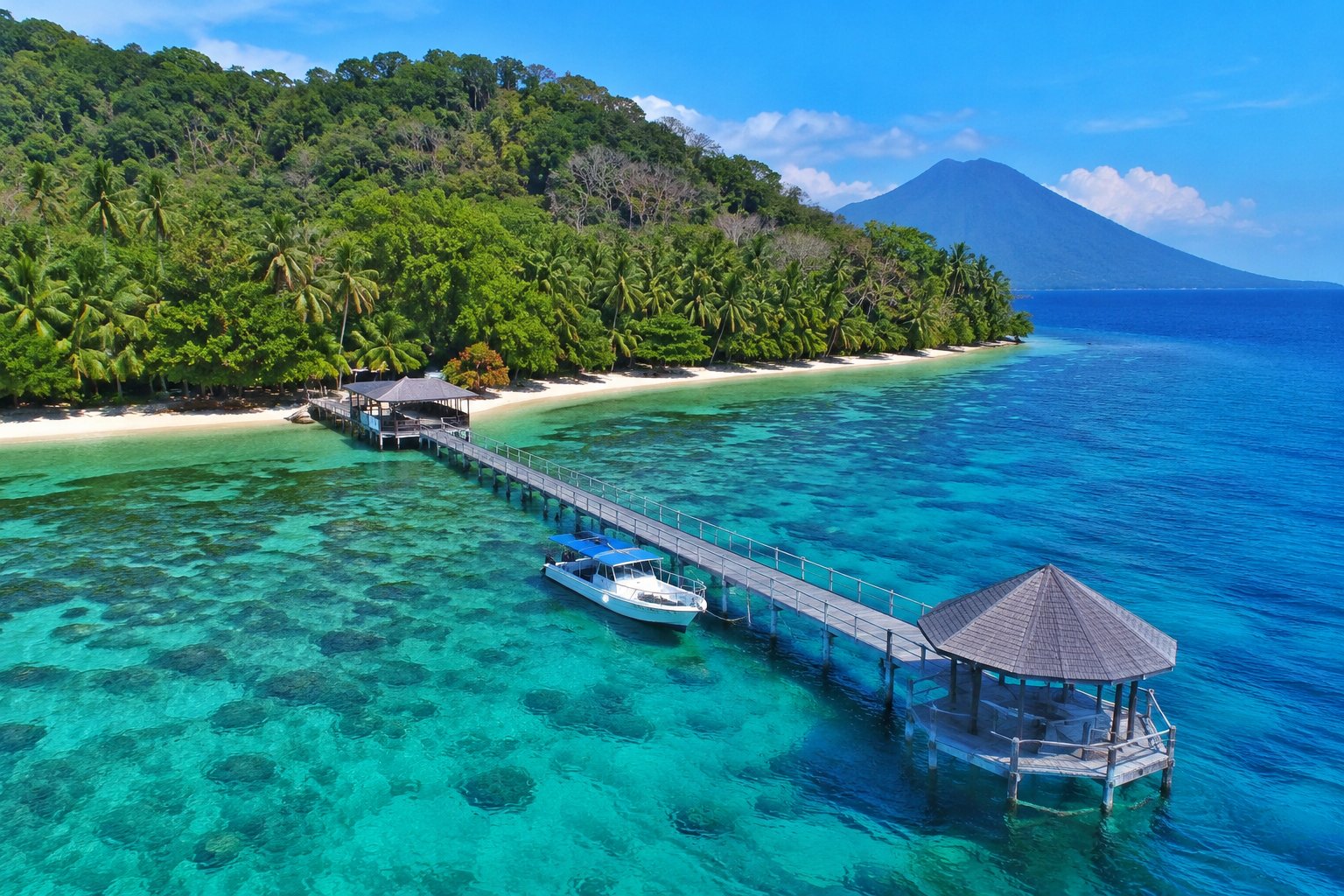
Diving Into Silence at Taman Nasional Bunaken

May 25, 2026(The Sightseer)
The Morning I Left Manado Behind
The harbor in Manado was already busy before sunrise. Small boats rocked gently beside the pier while fishermen carried buckets filled with the morning’s catch. The smell of salt, diesel, and seawater mixed together in the cold air.
I boarded a wooden boat heading toward Taman Nasional Bunaken, a marine national park located in North Sulawesi, Indonesia. The ride took around 40 to 50 minutes from Manado Port, depending on the weather and waves.
As the city slowly disappeared behind me, the sea became brighter. The water changed color every few minutes, from deep blue into impossible shades of turquoise. I remember sitting quietly at the edge of the boat, watching flying fish briefly break through the surface before vanishing again.
At that moment, the journey already felt different from ordinary travel.
What Makes Taman Nasional Bunaken Special
One of the Best Diving Destinations in the World
Taman Nasional Bunaken is internationally known for its extraordinary marine biodiversity. The park protects more than 890 species of fish and hundreds of coral species spread across several islands including Bunaken, Siladen, Manado Tua, Mantehage, and Nain.
Many divers visit Bunaken for its famous vertical coral walls that drop dramatically into the deep sea. Visibility can reach over 30 meters during good weather conditions, making it one of the clearest diving spots in Indonesia.
Even for someone who was not a professional diver, the underwater world felt unreal.
Snorkeling Felt Like Floating Inside an Aquarium
I entered the water near Bunaken Island just before noon. The first thing I noticed was the silence. No traffic. No conversations. Only the sound of my own breathing through the snorkel.
Below me, coral gardens stretched endlessly in every direction. Bright yellow fish moved between purple coral formations while schools of tiny silver fish reflected sunlight like mirrors.
At one point, a sea turtle appeared from the blue depths and swam slowly beside me. Nobody rushed toward it. Nobody shouted. Everyone simply floated and watched.
That moment stayed in my head long after I left the island.
Lunch by the Shore
Simple Food Somehow Tasted Better Here
After snorkeling, our boat stopped near a small local restaurant facing the sea. Lunch was simple: grilled fish, rice, sambal dabu-dabu, and fresh coconut water.
Maybe it was because of the ocean air, but everything tasted more alive.
The locals spoke softly and smiled often. Some children played barefoot near the shore while older fishermen repaired nets under the shade of coconut trees.
Bunaken did not feel like a luxury destination trying to impress visitors. It felt honest.
Watching the Sunset Near Manado Tua
The Sky Changed Faster Than I Expected
Before returning to Manado, the boat captain brought us near Manado Tua Island. The volcano stood quietly in the distance while the sun slowly disappeared behind it.
The sky turned orange, then pink, then deep purple.
I remember realizing how little I had checked my phone that day. For the first time in a long while, I felt completely disconnected from noise.
Not lonely.
Just peaceful.
Bunaken Travel Guide
How to Get to Taman Nasional Bunaken
From Manado to Bunaken Island
👉🏻 Fly to Sam Ratulangi International Airport (MDC) in Manado
👉🏻 Continue to Manado Port by taxi or online ride service (around 30–45 minutes)
👉🏻 Take a public boat or speedboat to Bunaken Island
Boat Information
👉🏻 Public boat: around IDR 50,000–100,000 per person
👉🏻 Private speedboat charter: around IDR 300,000–700,000 depending on group size
👉🏻 Travel time: approximately 40–50 minutes
Entrance Fee and Estimated Costs
Bunaken National Park Entrance Fee
👉🏻 Domestic tourists: around IDR 10,000–50,000
👉🏻 International tourists: around IDR 150,000–200,000
Snorkeling and Diving Costs
👉🏻 Snorkeling equipment rental: around IDR 50,000–100,000
👉🏻 Beginner diving session: starting from IDR 700,000–1,500,000
👉🏻 Certified diving packages vary depending on dive spots and duration
Prices may change depending on season and operator.
Best Time to Visit Bunaken
Ideal Season for Diving and Snorkeling
The best months to visit Taman Nasional Bunaken are generally:
👉🏻 April to October for calmer seas and clearer visibility
👉🏻 Early mornings usually provide the best underwater conditions
Rainy season can still be beautiful, but waves may become stronger and boat schedules less predictable.
Local Culture and Important Etiquette
Respecting the Sea Means Respecting the Locals
The people around Bunaken have a close relationship with the ocean. Many families depend on fishing and marine tourism for daily life.
While visiting:
👉🏻 Avoid touching coral reefs
👉🏻 Never step on marine life during snorkeling
👉🏻 Bring reusable water bottles to reduce plastic waste
👉🏻 Dress respectfully when entering local villages
👉🏻 Support local guides and small family-owned businesses whenever possible
The sea here is not only a tourist attraction. It is part of everyday life.
Travel Tips for Visiting Taman Nasional Bunaken
Things I Wish I Knew Earlier
👉🏻 Bring waterproof bags for electronics during boat rides
👉🏻 Use reef-safe sunscreen to protect coral ecosystems
👉🏻 Carry cash because some small islands have limited payment options
👉🏻 Start island trips early in the morning for calmer waters
👉🏻 If you get seasick easily, prepare motion sickness medicine before departure
Why Bunaken Stayed With Me
I came to Bunaken expecting beautiful underwater scenery. I left remembering something else entirely.
The silence beneath the water.
The slow rhythm of island life.
The feeling of floating above coral walls while sunlight moved across the sea floor like dancing glass.
Some places stay beautiful only in photographs.
Bunaken stayed inside my memory long after the boat returned to Manado.
Practical Travel Tips
- How to get thereMost locations are accessible via central public transport or local taxi apps. Plan your route in advance.
- Best time to visitEarly morning or late afternoon to avoid peak crowds and capture the best lighting.
Local Culture
- Always ask for permission before taking photos of local residents.
- Carry small cash for traditional markets or street food vendors.
- Dress respectfully when visiting historical or religious sanctuaries.
Related Stories
No related stories found.
Top Experiences
No experiences found.
Forums Community
Join the forum community.
Upcoming Meetups
No meetups scheduled.
Inspired by this story?
Discover amazing local experiences and read more authentic travel journals from around the world.
Verified Real-World Travel Report
This travel story serves as a real-world case study for neighborhood exploration. The contributor has personally visited the site, verified transportation costs, and documented safety protocols to ensure accurate, resident-verified guidance for future community travelers.
Verified Sources & Geolocation References▼
This travel guide incorporates details verified against official geolocation databases and international guidelines: