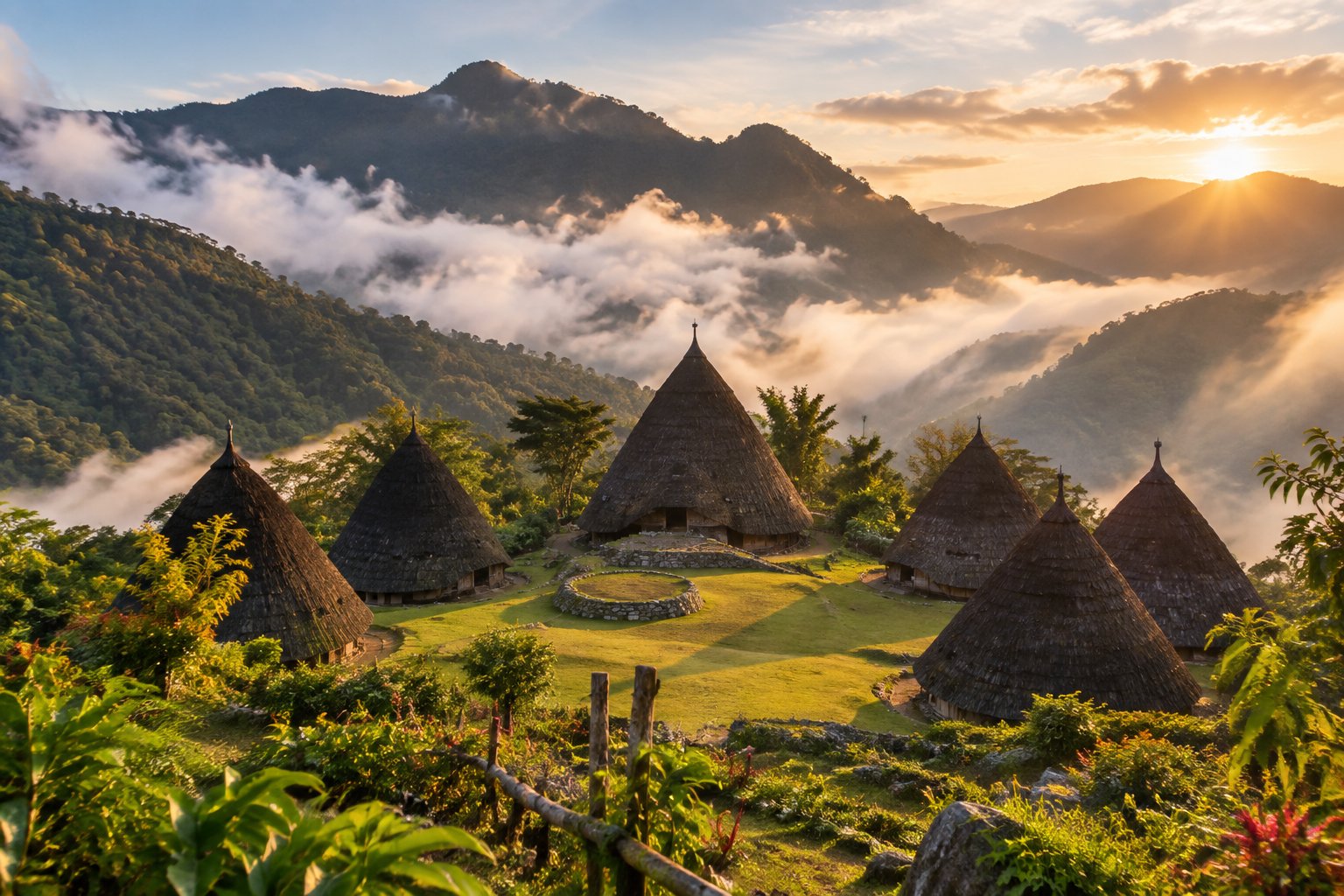
Desa Wae Rebo, Indonesia: A Journey Above the Clouds Into the Heart of Manggarai Culture

August 23, 2026(The Sightseer)
Walking Through the Misty Mountains to Discover Wae Rebo’s Traditional Soul
My journey to Desa Wae Rebo began with a long road through the beautiful landscapes of Flores, Indonesia. Located in Satar Mese District, Manggarai Regency, East Nusa Tenggara, this traditional village sits approximately 1,100 meters above sea level, surrounded by green mountains, dense forests, and endless clouds.
The final journey was not easy, but every step felt meaningful. After reaching the nearest village, I continued trekking for around 2–4 hours through tropical forests and mountain paths. The sound of birds, fresh mountain air, and the peaceful atmosphere slowly separated me from the busy modern world.
When I finally saw the seven cone-shaped Mbaru Niang houses appearing between the clouds, I felt a deep sense of wonder. It was like entering another time, where traditions are still protected and everyday life follows the rhythm of nature.
Experiencing the Authentic Life Inside Mbaru Niang
Staying overnight in a Mbaru Niang was one of the most unforgettable experiences of my trip. These traditional houses are not only unique architectural masterpieces but also important symbols of Manggarai heritage. The circular wooden structures with tall cone-shaped roofs represent the connection between humans, ancestors, and the natural world.
During my stay, I shared stories with local families, enjoyed traditional Manggarai meals, and learned about their customs. The warmth of the villagers made me feel welcomed, even though I was far away from home.
One of the special moments was joining the local welcoming ceremony, where visitors are introduced to the village traditions and asked to respect the cultural values of Wae Rebo. It reminded me that traveling is not only about seeing beautiful places but also about understanding the people who protect them.
Travel Information: How to Visit Desa Wae Rebo
Transportation:
To reach Wae Rebo, travelers usually fly to Komodo Airport in Labuan Bajo. From Labuan Bajo, the journey continues by car for approximately 5–7 hours to Denge Village, the starting point of the trek. From Denge, visitors must hike through the forest to reach Wae Rebo.
Best Time to Visit:
The best time to visit Desa Wae Rebo is during the dry season, from April to October, when trekking conditions are safer and the mountain views are clearer. Early mornings often provide the most magical atmosphere with clouds surrounding the village.
Estimated Cost:
• Transportation from Labuan Bajo to Denge Village: around IDR 1,000,000–2,000,000 depending on transportation options and group size.
• Village entrance and local contribution fees: approximately IDR 325,000–400,000 per person.
• Homestay and meals: usually included in the village package.
Respecting Local Culture During Your Visit
Before visiting Wae Rebo, travelers should remember that this is a living traditional village, not just a tourist destination. Dress respectfully, ask permission before taking photos of local people, and follow the guidance from village elders.
Bringing small gifts or supporting local products can also help the community continue preserving their cultural heritage.
Leaving Wae Rebo was an emotional moment. The peaceful mountains, friendly faces, and ancient traditions stayed in my heart long after I returned. This village taught me that some journeys are not only measured by distance, but by the memories and connections created along the way.
Practical Travel Tips
- How to get thereMost locations are accessible via central public transport or local taxi apps. Plan your route in advance.
- Best time to visitEarly morning or late afternoon to avoid peak crowds and capture the best lighting.
Local Culture
- Always ask for permission before taking photos of local residents.
- Carry small cash for traditional markets or street food vendors.
- Dress respectfully when visiting historical or religious sanctuaries.
Related Stories
No related stories found.
Top Experiences
No experiences found.
Forums Community
Join the forum community.
Upcoming Meetups
No meetups scheduled.
Inspired by this story?
Discover amazing local experiences and read more authentic travel journals from around the world.
Verified Real-World Travel Report
This travel story serves as a real-world case study for neighborhood exploration. The contributor has personally visited the site, verified transportation costs, and documented safety protocols to ensure accurate, resident-verified guidance for future community travelers.
Verified Sources & Geolocation References▼
This travel guide incorporates details verified against official geolocation databases and international guidelines: