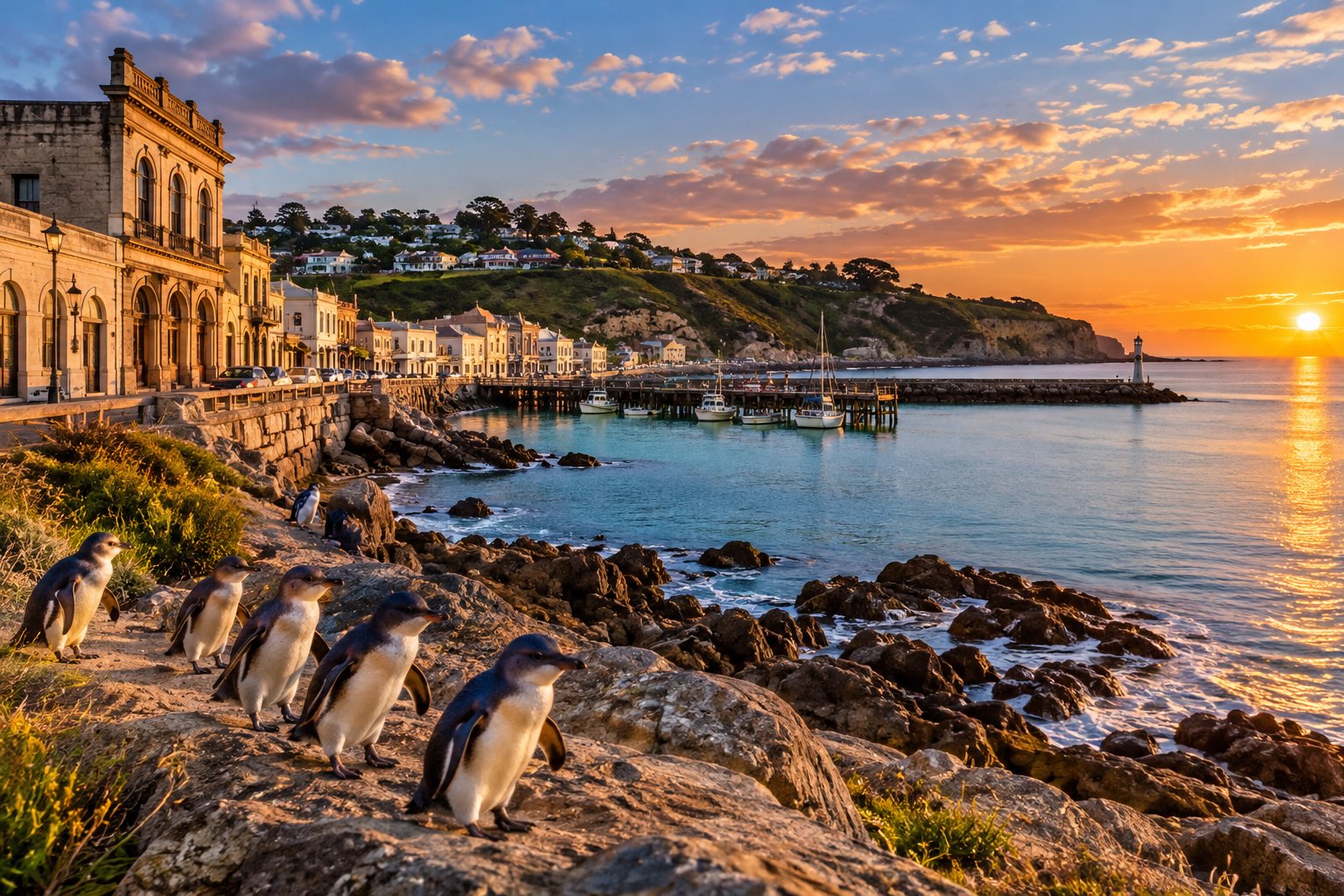
Ōamaru, Otago, New Zealand: Where Victorian Streets Meet Little Blue Penguins

3h ago(The Sightseer)
A Slow Journey Through Ōamaru
There was something unexpectedly peaceful about arriving in Ōamaru. After travelling through the wide landscapes of Otago, I found myself in a small coastal town where white limestone buildings, quiet streets, and the sound of the ocean created a completely different rhythm.
My first stop was the Ōamaru Victorian Precinct, one of the most memorable heritage areas I visited in New Zealand. Walking along Harbour Street felt almost like stepping into another century. The beautifully preserved Victorian buildings were constructed using local Waitaki whitestone, and today many of them have been transformed into galleries, artisan shops, cafés, and creative spaces. citeturn1search9
Walking Through the Victorian Precinct
I recommend exploring the precinct slowly rather than rushing from one attraction to another. The old architecture, stone walls, vintage details, and independent businesses make the walk itself part of the experience.
I stopped for a coffee and something sweet at a local café before continuing toward the harbour. Ōamaru has a relaxed food culture, with cafés serving Kiwi favourites, homemade pastries, pies, cakes, and locally produced food. citeturn1search7turn1search11
For me, the charm was not simply in seeing old buildings. It was in imagining the stories that happened here when Ōamaru was an important port town.
Following the Coastline
From the historic centre, I continued toward the waterfront. The atmosphere changed almost immediately. The architecture gave way to open skies, sea breeze, rocky shoreline, and expansive coastal views.
One of my favourite things about travelling around Otago is how quickly the scenery changes. In Ōamaru, the coast feels wild but accessible, making it easy to combine heritage sightseeing with nature.
If you have more time, consider exploring nearby coastal areas and viewpoints around Waitaki. The region offers a beautiful combination of historical landscapes, wildlife, beaches, and ocean scenery. citeturn1search6
Little Blue Penguins at Dusk
The most unforgettable part of my visit came after sunset.
I headed to Ōamaru Penguins to see the little blue penguins, or kororā, returning from the sea. These tiny penguins spend much of the day fishing and return to shore in the evening.
Watching them arrive was completely different from seeing wildlife in a zoo. They are wild animals, moving according to their own rhythm, and the anticipation of waiting quietly made the experience even more special. The colony has been involved in research and conservation since 1993, with ongoing monitoring of the penguin population and breeding success. citeturn1search4turn1search8
The current evening viewing ticket is NZ$47 for adults and NZ$29 for children aged 5–17, while premium viewing costs more. Children under five are free. Prices are in New Zealand dollars and include GST. citeturn1search1turn1search2
Spring and summer can also be rewarding for wildlife experiences, although penguin behaviour and arrival numbers naturally vary with weather and their life cycle. citeturn1search32
Getting There and Getting Around
Ōamaru is approximately 1.5 hours north of Dunedin and around 3.5 hours south of Christchurch by car. The penguin colony is only about five minutes from central Ōamaru and is located at 17 Waterfront Road, near the harbour. citeturn1search5
For this trip, I found having a car particularly convenient because it allowed me to combine the Victorian Precinct, harbour, coastal viewpoints, and nearby wildlife areas at my own pace. Within the Victorian Precinct itself, walking is the best way to explore the historic streets. citeturn1search9
Travel Tips and Local Etiquette
Bring warm layers, especially if you are staying for the evening penguin viewing. Even during summer, the coastal air can feel chilly. citeturn1search5
Most importantly, respect the wildlife. Stay quiet and still when penguins are nearby, never cross barriers or enter protected habitats, and follow photography rules. Evening viewing does not allow photography or filming, while daytime photography is permitted without flash in designated areas. citeturn1search2turn1search5
I also found that Ōamaru is best enjoyed slowly. Talk to local café owners, browse independent shops, take time to appreciate the old stone buildings, and leave enough space in your itinerary for the coastline.
A Memory I Took Home
What stayed with me most was the contrast.
During the day, Ōamaru felt like a beautifully preserved chapter of Victorian New Zealand. By evening, the town belonged to the ocean and the tiny kororā making their way home.
It reminded me that some of the best travel experiences do not need to be loud or spectacular. Sometimes, they are simply a quiet walk through an old street, a warm drink by the sea, and the sight of tiny penguins disappearing into the darkness.
Ōamaru gave me exactly that a slow, authentic glimpse of Otago where history, local culture, food, coastline, and wildlife exist side by side.
Practical Travel Tips
- How to get thereMost locations are accessible via central public transport or local taxi apps. Plan your route in advance.
- Best time to visitI would plan the penguin experience around **dusk**, because that is when the little penguins return from the ocean. Viewing times change with sunset: from October to March, evening viewing generally begins between 7:00 and 9:00 pm, while from April to September it generally begins between 5:00 and 6:30 pm. citeturn1search5
Local Culture
- Always ask for permission before taking photos of local residents.
- Carry small cash for traditional markets or street food vendors.
- Dress respectfully when visiting historical or religious sanctuaries.
Related Stories
No related stories found.
Top Experiences
No experiences found.
Forums Community
Join the forum community.
Upcoming Meetups
No meetups scheduled.
Inspired by this story?
Discover amazing local experiences and read more authentic travel journals from around the world.
Verified Real-World Travel Report
This travel story serves as a real-world case study for neighborhood exploration. The contributor has personally visited the site, verified transportation costs, and documented safety protocols to ensure accurate, resident-verified guidance for future community travelers.
Verified Sources & Geolocation References▼
This travel guide incorporates details verified against official geolocation databases and international guidelines: