Wandering into Tetebatu, Lombok: Green Terraces, Hidden Cascades & Rinjani’s Gentle Foothills
"High on the southern slopes of Mount Rinjani lies Tetebatu, where mornings arrive wrapped in mountain mist and emerald rice paddies mirror the sky. Here is what slow, authentic travel in East Lombok feels like."
~6 - 8 Jam
Pagi hari (08:00 - 10:30)
Pusat Lombok / Akses Transit Utama
Most travelers arrive on Lombok with salt in their hair, chasing the legendary surf breaks of Kuta Lombok or the turquoise shallows around the Gili Islands. But if you take a scooter and head inland towards the misty contours of Mount Rinjani, the dry coastal breeze gradually softens into crisp mountain air. Within two hours, the dusty asphalt gives way to winding lanes lined with clove trees, towering bamboo groves, and cascading emerald paddies.
Welcome to Tetebatu—an unhurried highland sanctuary nestled at an elevation of roughly 700 to 800 meters above sea level in East Lombok (Lombok Timur), West Nusa Tenggara.
Here is my personal field guide to exploring this tranquil corner of the island, soaking in its natural wonders, and connecting with the Sasak communities who have cultivated these hills for generations.
1. Morning Light Across the Stepped Rice Terraces
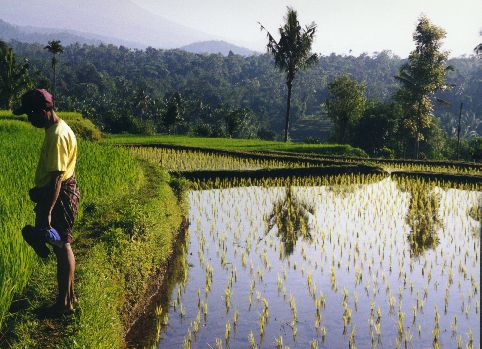
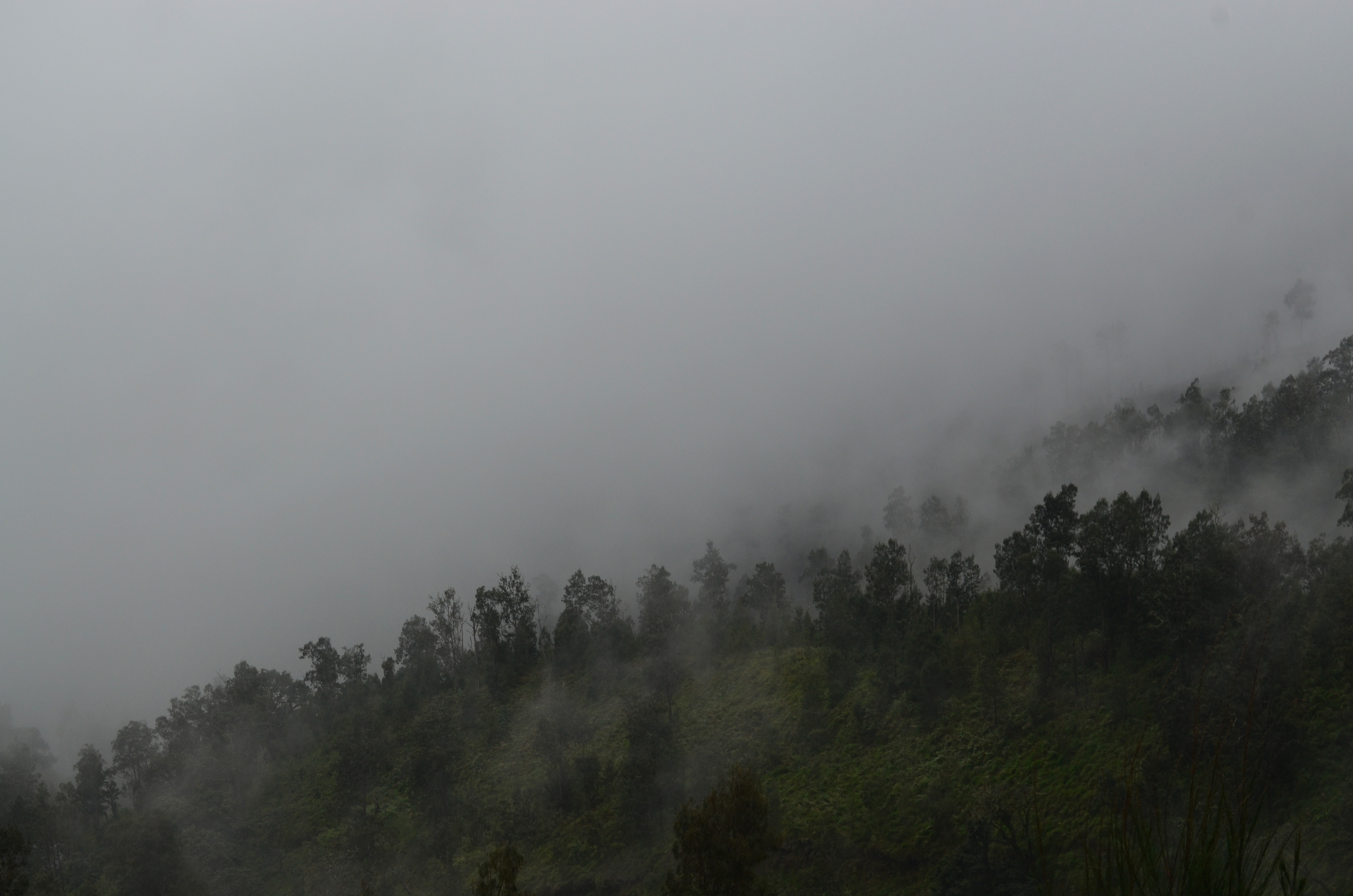
My first morning in Tetebatu started at 6:00 AM. In the cool mountain stillness, a thin blanket of mist hovered over the tiered rice paddies, glowing golden as the early sunrise peeked over Mount Rinjani's ridge.
Unlike the famous tourist-heavy terraces in southern Bali, the paddies in Tetebatu feel refreshingly undisturbed. Local farmers wearing traditional woven bamboo hats (caping) were already tending to the irrigation channels (subak system), guiding fresh volcanic spring water down each stepped terrace.
Walking along the narrow mud dykes (pematang), you are surrounded by an intoxicating mixture of damp earth, lemongrass, and flowering coffee shrubs. If you take the southern terrace trail toward the village of Kotaraja, you get an uninterrupted, panoramic view of Mount Rinjani towering proudly in the northern sky.
Local Insider Tip: Plan your walk between 6:30 AM and 8:30 AM. After 10:00 AM, high-altitude clouds frequently gather around Rinjani's peak, softening the dramatic mountain silhouette into white mist.
2. Venturing to Sarang Walet & Hidden Waterfalls
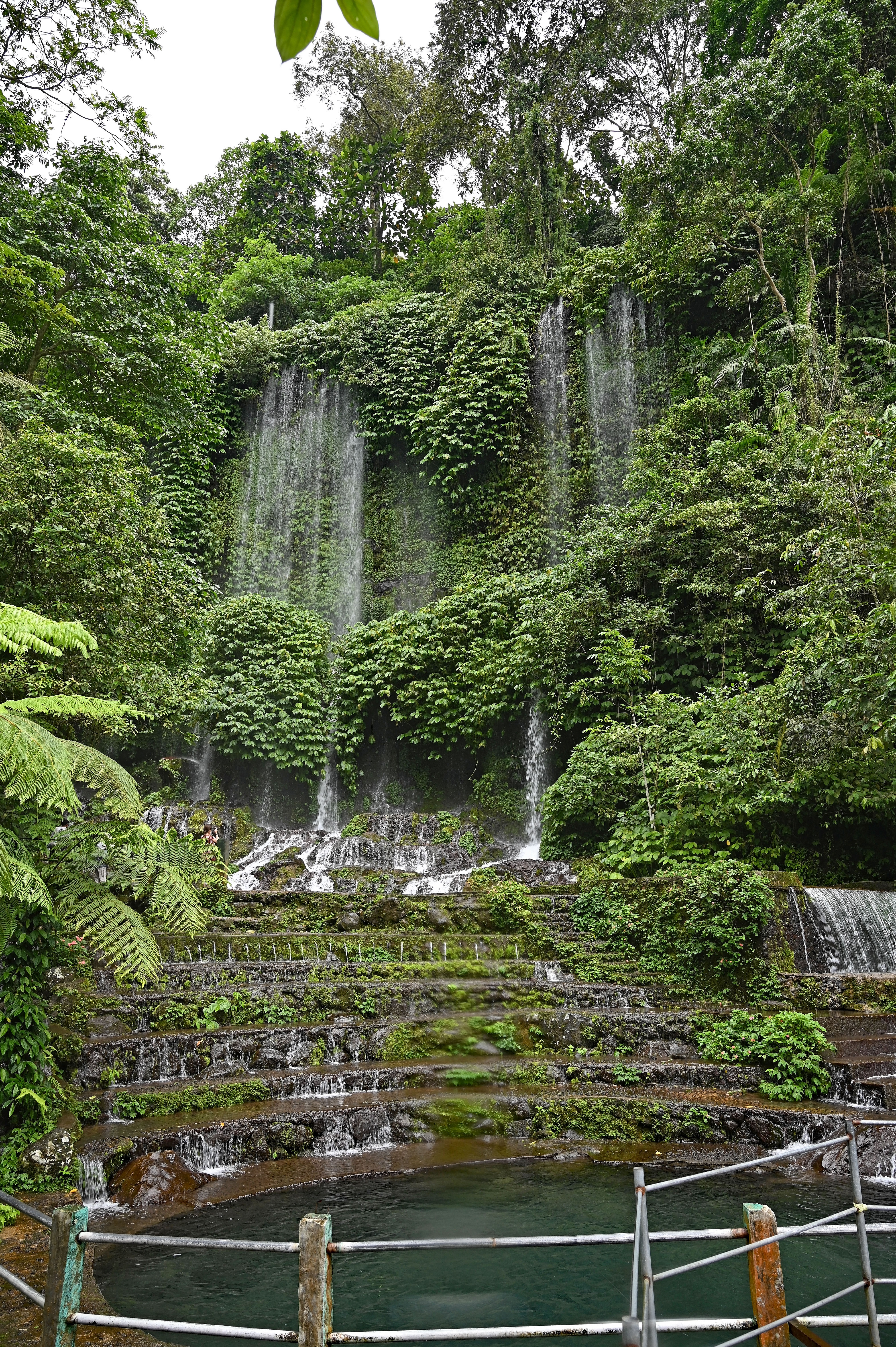
Tetebatu's landscape is blessed with dozens of natural springs fed directly by Rinjani's high volcanic watershed. While there are several marked cascades in the area, the highlight of my trip was the trek to Air Terjun Sarang Walet (Swallow's Nest Waterfall).
The journey to Sarang Walet is half the thrill:
- You start along a scenic dirt path through small cacao and vanilla plantations.
- Then, the trail dips down into a narrow, moss-draped canyon carved by a rocky mountain river.
- You wade knee-deep through chilly, crystal-clear water flanked by towering volcanic rock faces dripping with wild ferns.
At the end of the natural canyon corridor, the waterfall reveals itself inside a semi-enclosed cave chamber where swiftlets dart overhead across the damp rocky ceiling. The roar of the water echoing against the rock and the cool spray on your face after a humid trek is unforgettable.
If you have extra time, don't miss Air Terjun Jeruk Manis (Sweet Orange Waterfall) within the national park boundary, known for its deep jungle pool, and Tibu Bunter, a serene double stream cascading over basalt stone blocks.
3. Encountering the Black Crested Macaques in the Monkey Forest
Just on the edge of Mount Rinjani National Park lies Tetebatu’s Hutan Monyet (Monkey Forest). But do not picture the pushy, snack-stealing monkeys of Ubud.
Tetebatu is home to the rare and shy Javan lutung (Trachypithecus auratus), also known locally as the black crested langur. These arboreal primates spend their days gracefully leaping across the highest branches of mahogany and ficus trees. Spotting a family of ebony langurs silently feeding on tender canopy leaves against the deep forest green is an exhilarating, quiet wildlife encounter that demands nothing from you other than stillness.
4. Tasting Highland Coffee & Sasak Culinary Warmth
Slow travel is incomplete without slow dining. Tetebatu's volcanic loam creates ideal conditions for cultivating Arabica and Robusta beans, vanilla, nutmeg, cloves, and chili.
During my stay, I spent an afternoon with a local Sasak family roasting freshly harvested coffee beans over an open wood-fired earthenware pan. The aroma of slightly caramelized beans mixed with woodsmoke is the definition of rural comfort. We crushed the roast in a heavy wooden pestle (lesung) and brewed a steaming cup of Kopi Sasak, spiced with a sliver of fresh ginger.
For dinner, make sure to try:
- Ayam Taliwang Kampoeng: Free-range highland chicken grilled over coconut husks, basted with fiery red chili, shallots, garlic, and wild shrimp paste (terasi Lombok).
- Plecing Kangkung: Crisp water spinach blanched and served cold, topped with toasted peanuts, freshly squeezed kaffir lime, and savory tomato-chili sambal.
- Urab Sayur: Steamed local garden greens tossed with freshly grated, spiced coconut.
5. Practical Guide & GEO Logistics for Travelers
If you are planning your own escape into East Lombok’s highland sanctuary, here are the essential logistics you need to know:
Location & Getting There
- Coordinates:
8.5262° S, 116.4103° E - Region: Sikur District, East Lombok Regency (Lombok Timur), West Nusa Tenggara, Indonesia.
- From Lombok International Airport (Praya / LOP): Approximately 1.5 hours by car or scooter (around 45 km via the Praya – Kopang – Sikur route).
- From Kuta Lombok: Roughly 2 hours scenic drive north.
- From Mataram / Senggigi: About 1.5 to 2 hours drive eastward across the central Lombok artery.
Best Time to Visit
- May to October (Dry Season): Clear blue morning skies, dry trails, and golden sunshine for trekking through the rice paddies.
- November to April (Green / Wet Season): The rice paddies are at their most vibrant electric green, and waterfalls run at maximum power. Expect afternoon rain showers, making mornings the prime window for outdoor exploration.
Respectful Cultural Etiquette
Tetebatu is a peaceful and deeply traditional Sasak community.
- Dress modestly when walking through residential village paths (cover shoulders and knees).
- Greet villagers with a friendly "Halo" or "Selamat pagi" and a gentle smile—hospitality here is genuine and deeply rooted.
- If you hire a local guide for the waterfall trek, book directly with local youth cooperatives or your village homestay. It directly supports sustainable community-based tourism in East Lombok.
Final Thoughts from Rory Regentina
There is a distinct, therapeutic stillness in Tetebatu that is becoming increasingly rare in Southeast Asia. Here, time isn't measured by notifications or itineraries, but by the morning mist clearing from Rinjani, the rustle of wind through bamboo groves, and the warm smiles exchanged over a shared cup of fresh coffee.
If your soul needs a gentle pause from the fast lane, pack a light jacket, put your phone on airplane mode, and let the green terraces of Tetebatu welcome you home.
Cerita ini dikurasi dan diverifikasi sesuai Standar Pedoman Komunitas & Editorial PT Locallytrip Teknologi Indonesia.
Beri inspirasi ke sesama traveler! 🌍
Bagikan cerita otentik ini ke media sosial favoritmu dalam sekali klik.