
Dubai, United Arab Emirates: Finding the Soul Behind the Skyline at Al Fahidi Historical Neighborhood
"Before Dubai became a city of glass towers and record-breaking attractions, it was a place shaped by desert winds, merchants, and quiet courtyards. Walking through Al Fahidi Historical Neighborhood felt like stepping into a forgotten chapter of the city one where history still whispers through narrow alleyways and traditional wind towers. Tags"

~5 - 7 Jam
Pagi hari (08:00 - 10:30)
Pusat Dubai / Akses Transit Utama
Dubai is often introduced through its modern wonders towering skyscrapers, luxury shopping malls, and futuristic architecture. But during my visit, I found myself searching for something different. I wanted to see the Dubai that existed before the glass and steel.
That search led me to Al Fahidi Historical Neighborhood, one of the oldest preserved heritage districts in Dubai. Hidden among the city's rapid development, this neighborhood offers a glimpse into traditional Emirati life and the history that helped shape modern Dubai.
Walking Into a Different Dubai
I arrived early in the morning when the sun was still gentle and the streets remained quiet.
The moment I stepped inside the neighborhood, the atmosphere changed completely.
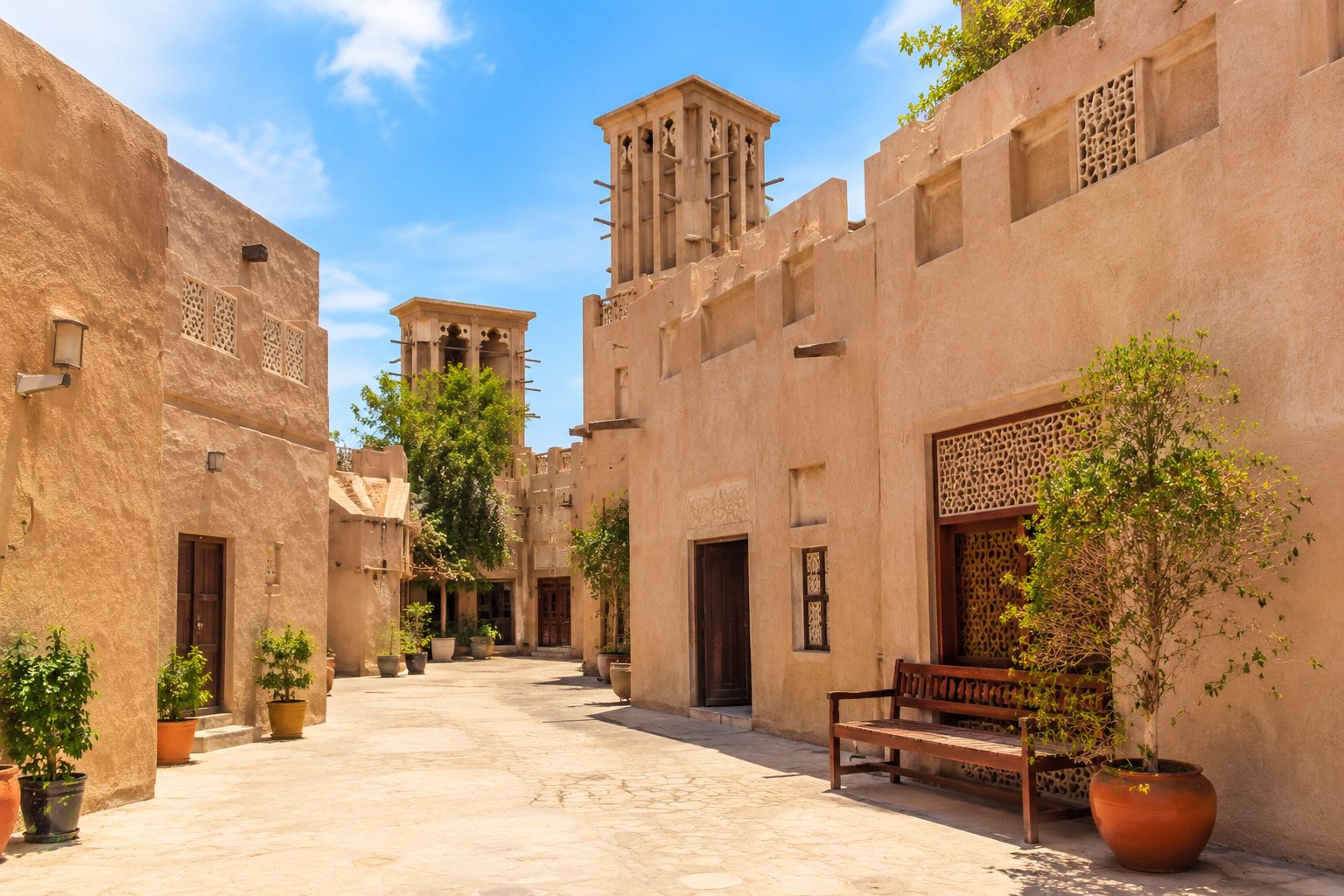
Gone were the busy highways and towering skyscrapers. Instead, I found myself surrounded by narrow sand-colored alleyways, traditional courtyard houses, and historic wind towers rising above the rooftops.
The silence felt comforting.
As I wandered through the maze-like streets, I noticed how every corner seemed designed to slow people down. The walls carried the warm colors of the desert, while wooden doors and carved details reflected a simpler era of life in the Gulf.
For a moment, it felt difficult to believe I was still in Dubai.
The Stories Hidden Inside the Wind Towers
Traditional Architecture That Still Breathes
One of the most fascinating features of Al Fahidi is its collection of barjeel, or traditional wind towers.
Long before air conditioning existed, these towers captured desert breezes and directed cool air into homes below. Standing beneath them, I couldn't help but admire the ingenuity of the people who built this community generations ago.
The architecture wasn't created to impress tourists.
It was created to survive the climate.
That practicality gives the neighborhood an authenticity that feels increasingly rare in modern cities.
Every Alley Holds a Piece of History
As I continued exploring, I discovered small museums, cultural exhibits, art galleries, and community spaces hidden throughout the district.
Many of the restored buildings now serve as cultural centers where visitors can learn about Emirati traditions, pearl diving history, trade routes, and local customs.
Unlike many historical attractions, Al Fahidi doesn't feel frozen in time.
It feels alive.
Artists work inside restored buildings, cultural events are regularly held, and visitors from around the world gather to learn about Dubai's roots.
Crossing Dubai Creek and Understanding the City's Origins
One of my favorite moments happened after leaving the neighborhood.
A short walk brought me to Dubai Creek, the waterway that played a crucial role in the city's development.
Standing near the creek, watching traditional wooden abras glide across the water, I finally understood why Dubai began here.
Before oil, before skyscrapers, before international fame, trade and maritime life revolved around these waters.
The view connected everything.
Al Fahidi was no longer just a collection of historic buildings. It became part of a larger story about resilience, commerce, and cultural exchange.
The Quiet Beauty of Slowing Down
What stayed with me most wasn't a particular building or museum.
It was the feeling.
Dubai often encourages movement seeing more attractions, visiting more landmarks, chasing bigger experiences.
Al Fahidi encouraged the opposite.
It invited me to walk slower.
To notice details.
To listen.
To appreciate how a city can honor its past while continuing to build its future.
In a destination famous for looking forward, Al Fahidi reminded me of the importance of looking back.
Practical Travel Guide to Al Fahidi Historical Neighborhood
Location
Al Fahidi Historical Neighborhood Bur Dubai, Dubai, United Arab Emirates
Entrance Fee
👉🏻 Entry to the neighborhood: Free
👉🏻 Some museums and cultural exhibitions may charge small admission fees.
👉🏻 Prices can vary depending on temporary exhibitions and cultural programs.
Opening Hours
👉🏻 The neighborhood itself is accessible throughout the day.
👉🏻 Museums and galleries generally operate between 9:00 AM and 6:00 PM.
👉🏻 Opening times may vary during Ramadan and public holidays.
Best Time to Visit
The best months to visit are:
👉🏻 November to March for cooler temperatures.
👉🏻 Early morning for quieter streets and softer photography light.
👉🏻 Late afternoon for beautiful golden-hour lighting.
How to Get There
By Dubai Metro
👉🏻 Take the Green Line to Sharaf DG Station.
👉🏻 Walk approximately 10–15 minutes to the neighborhood.
By Taxi
👉🏻 Easily accessible from anywhere in Dubai.
👉🏻 Most drivers are familiar with Al Fahidi Historical Neighborhood.
By Abra
Combine your visit with a traditional abra ride across Dubai Creek for a more authentic experience.
Local Culture Tips
👉🏻 Dress modestly, especially when visiting cultural centers and museums.
👉🏻 Always ask permission before photographing local people.
👉🏻 Respect religious practices and cultural customs.
👉🏻 During Ramadan, be mindful of local etiquette and operating hours.
👉🏻 Take time to engage with cultural exhibitions rather than rushing through them.
Final Thoughts
Al Fahidi Historical Neighborhood showed me a side of Dubai that many visitors overlook.
Behind the city's famous skyline lies a quieter story one built on trade, tradition, community, and adaptation to the desert environment.
Walking through its narrow lanes felt less like visiting a tourist attraction and more like having a conversation with the city's past.
And among all the modern wonders Dubai offers, that conversation became one of the most memorable experiences of my journey.
Cerita ini dikurasi dan diverifikasi sesuai Standar Pedoman Komunitas & Editorial PT Locallytrip Teknologi Indonesia.
Beri inspirasi ke sesama traveler! 🌍
Bagikan cerita otentik ini ke media sosial favoritmu dalam sekali klik.